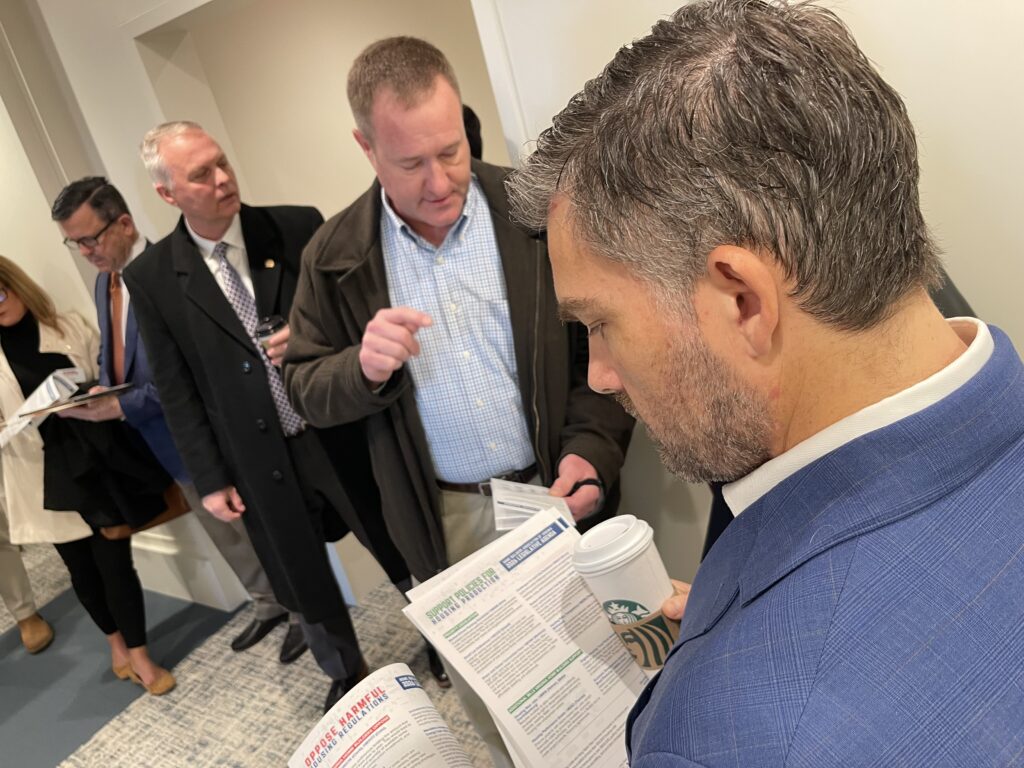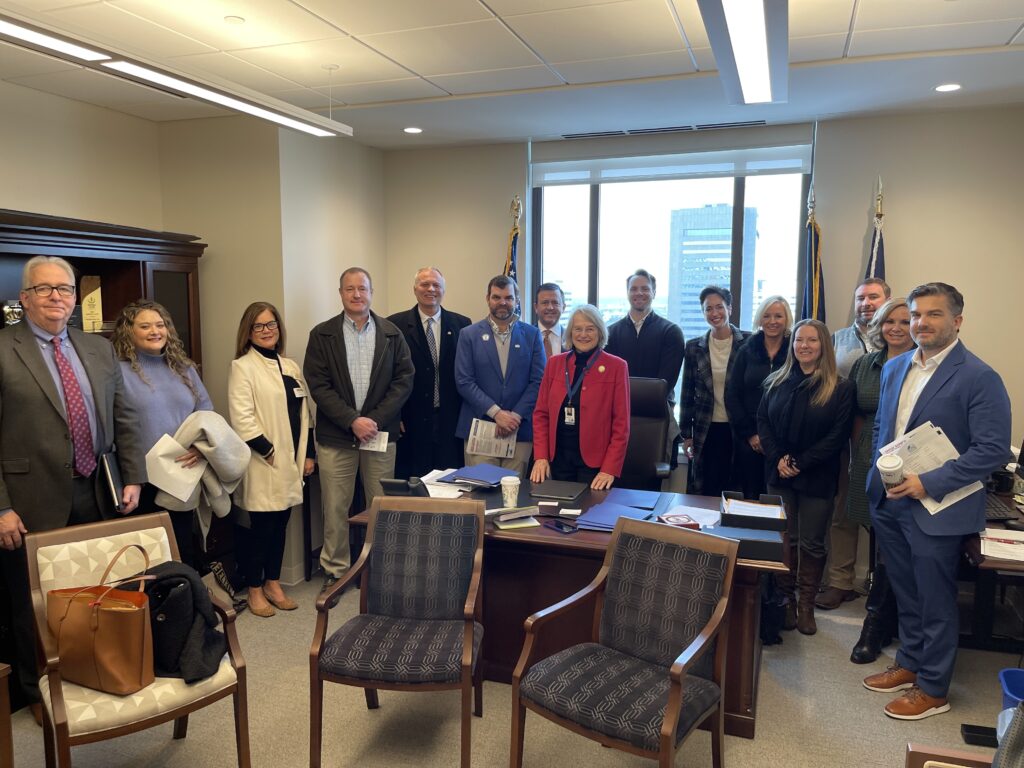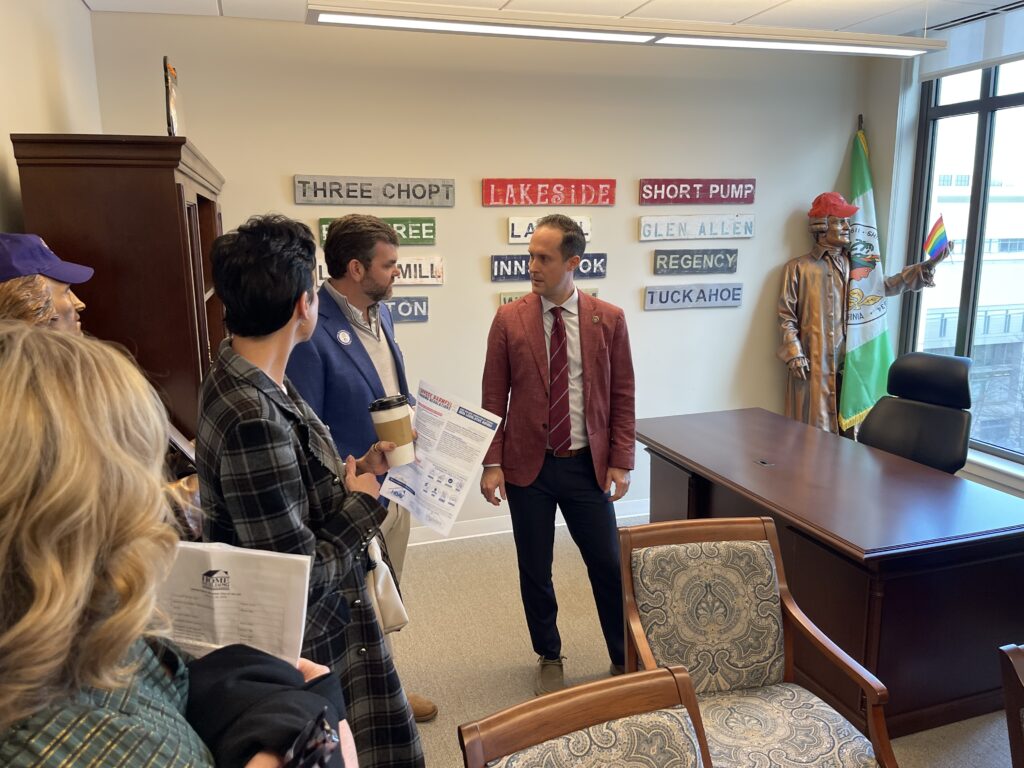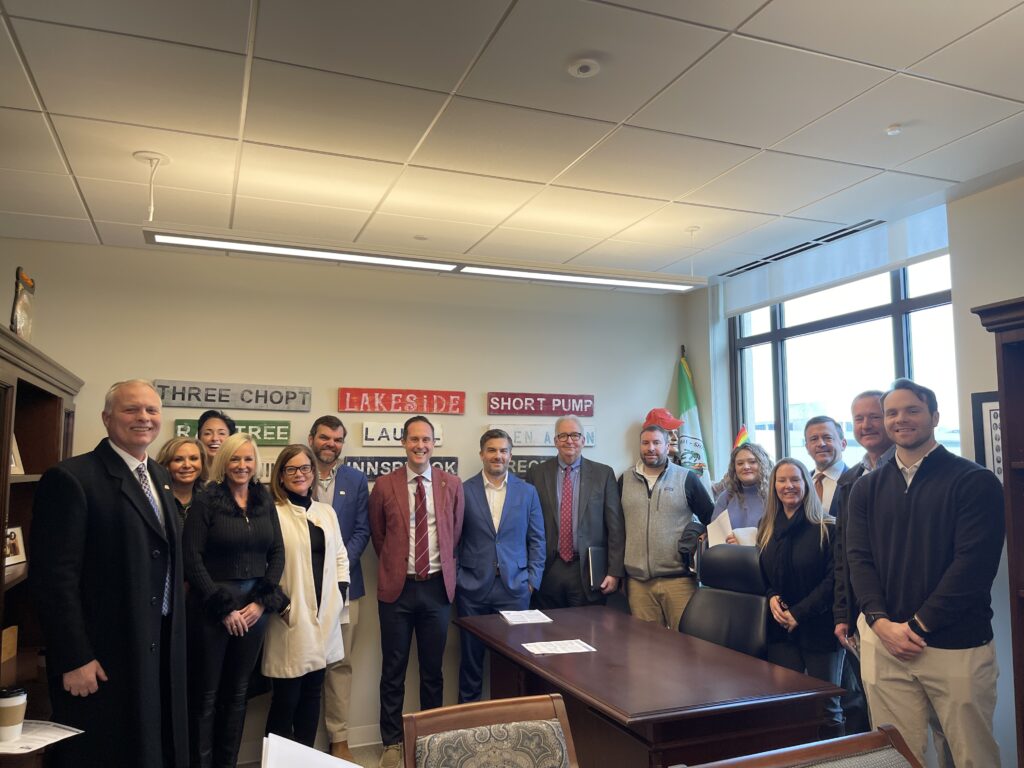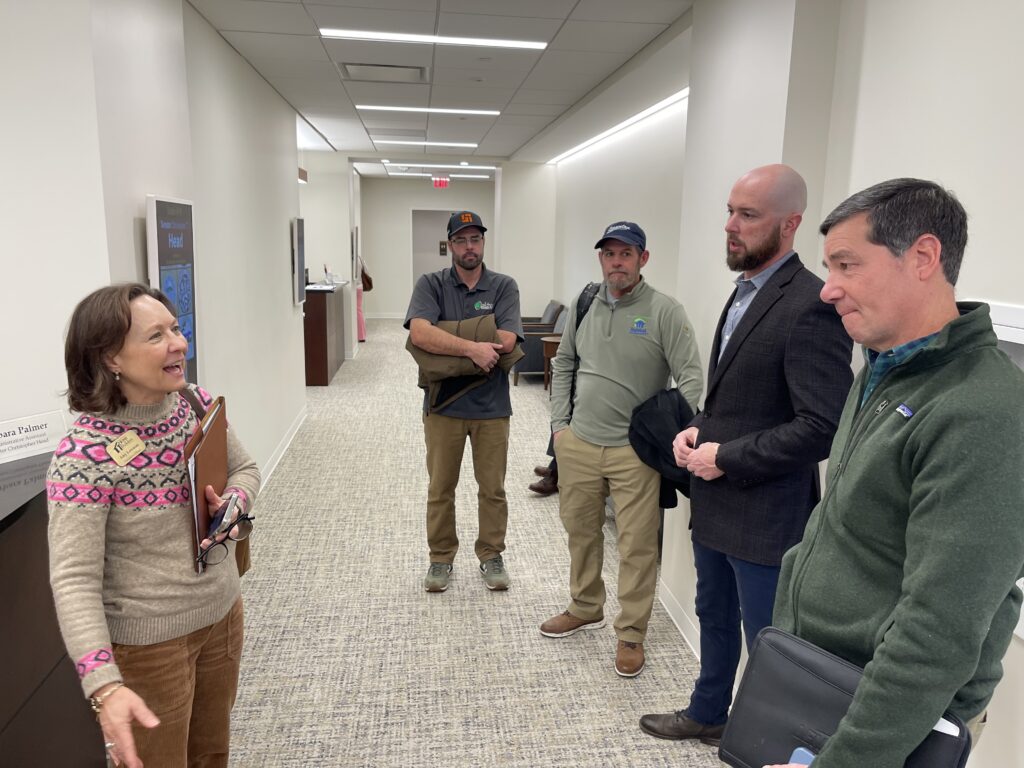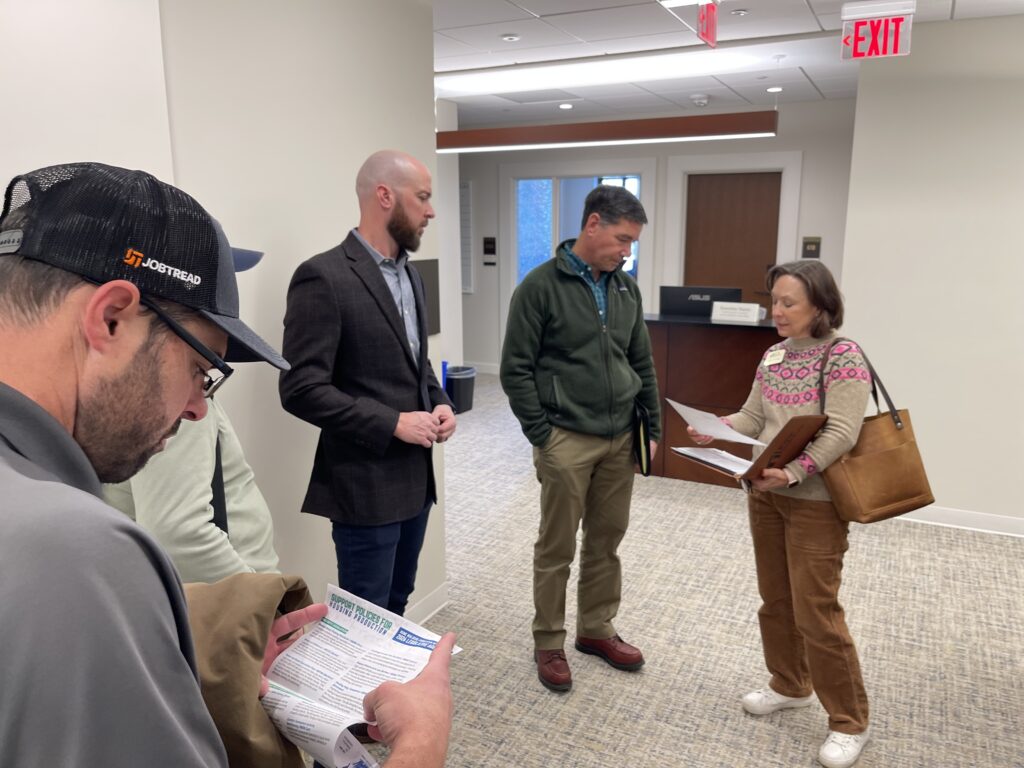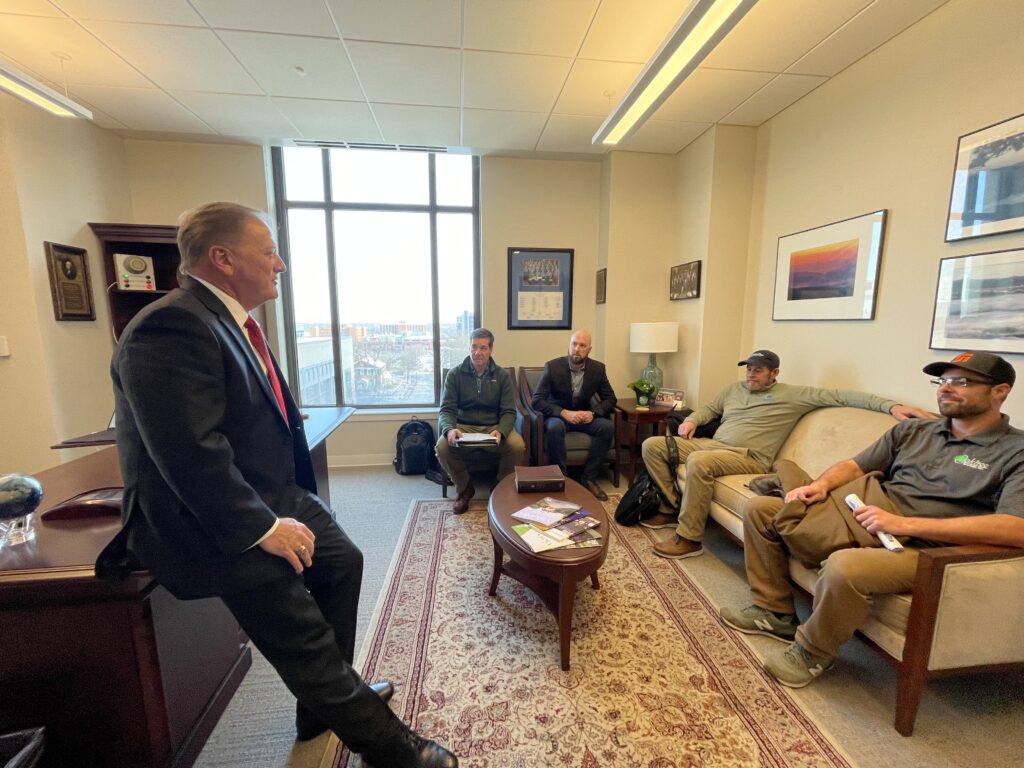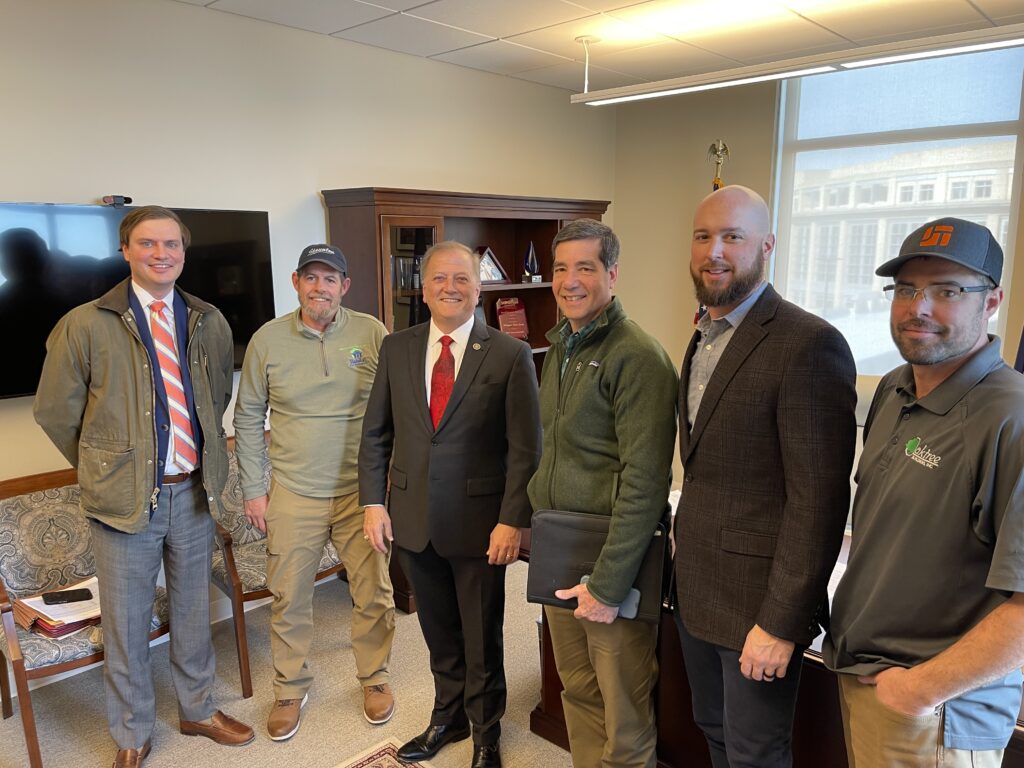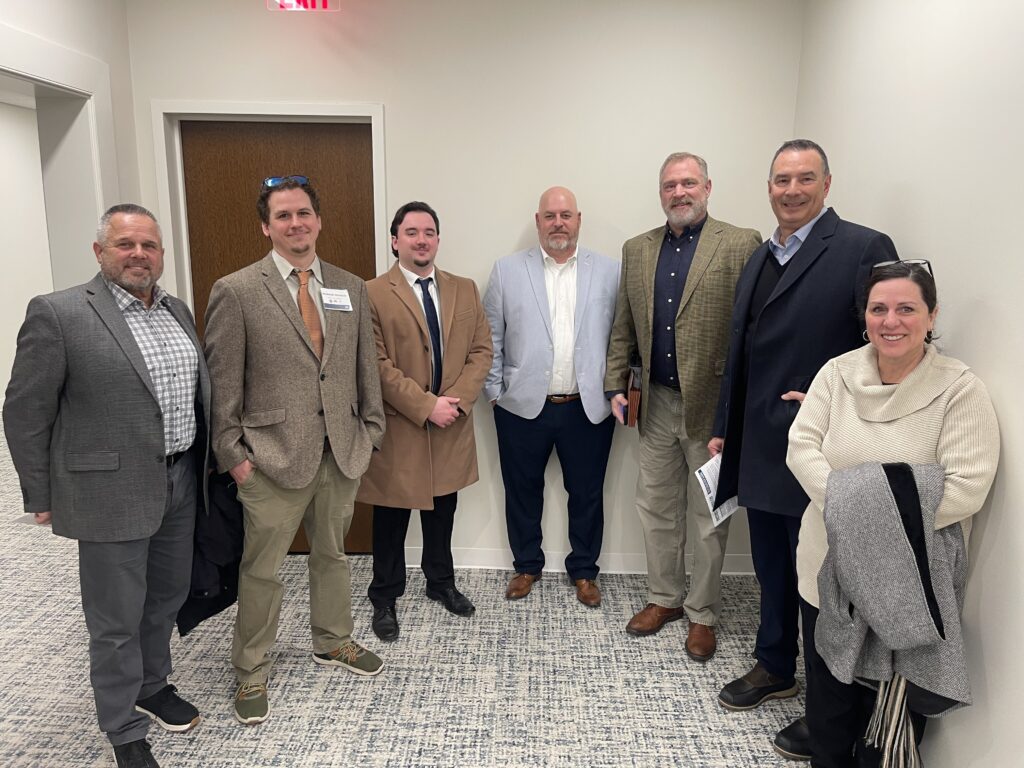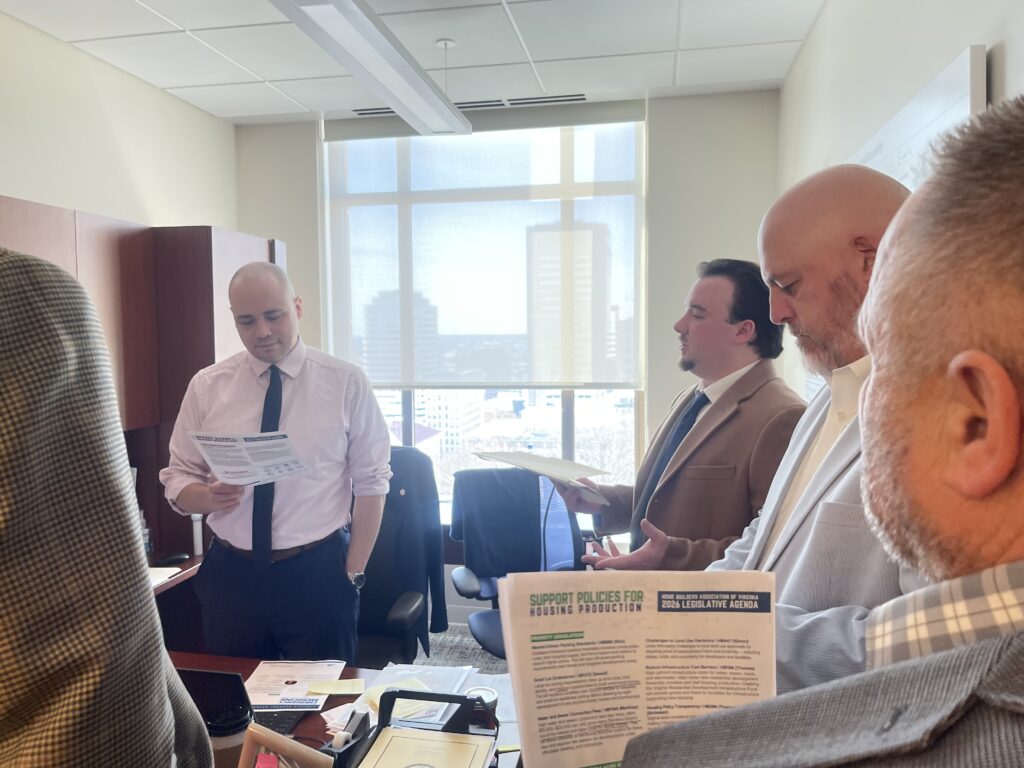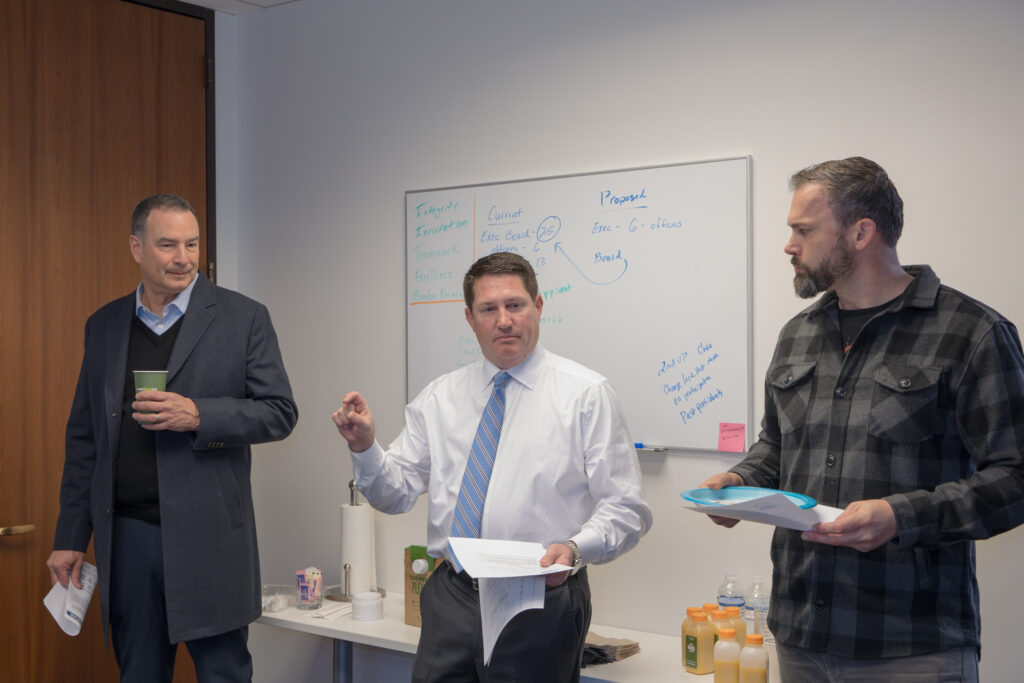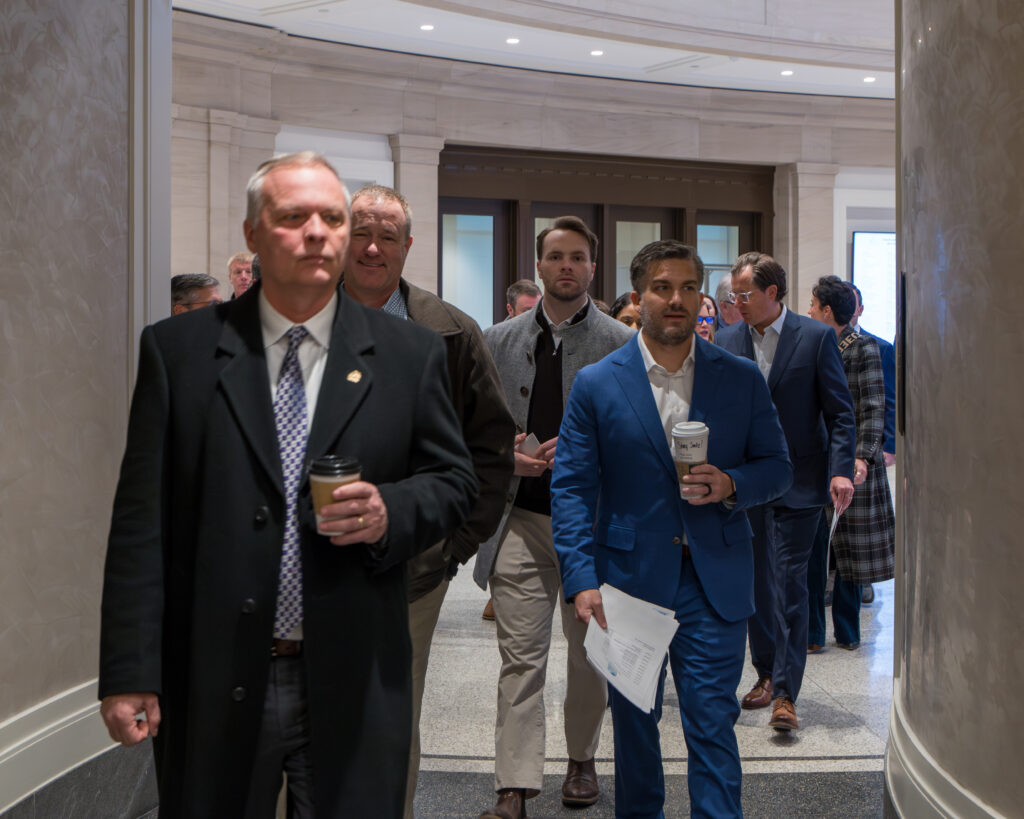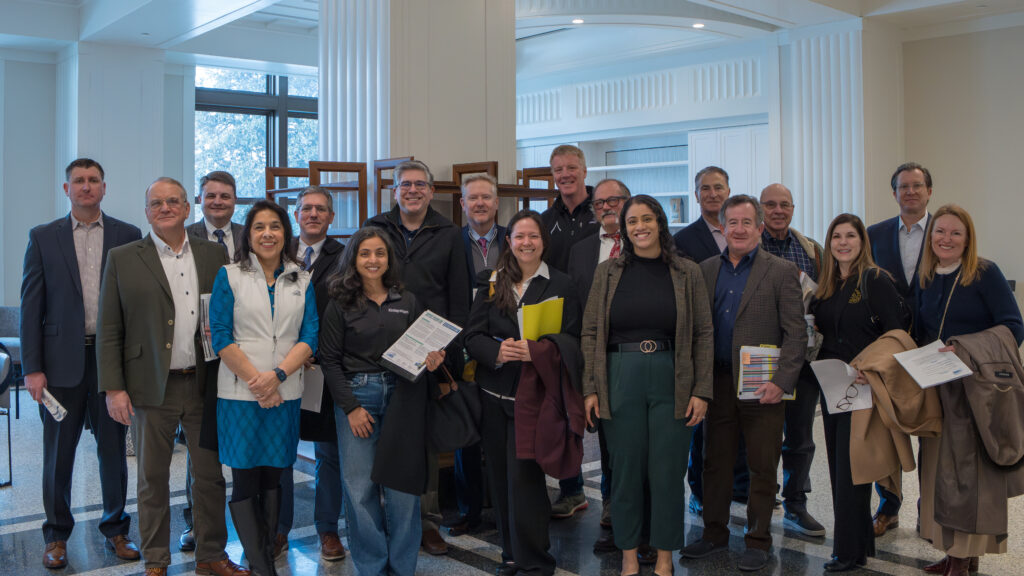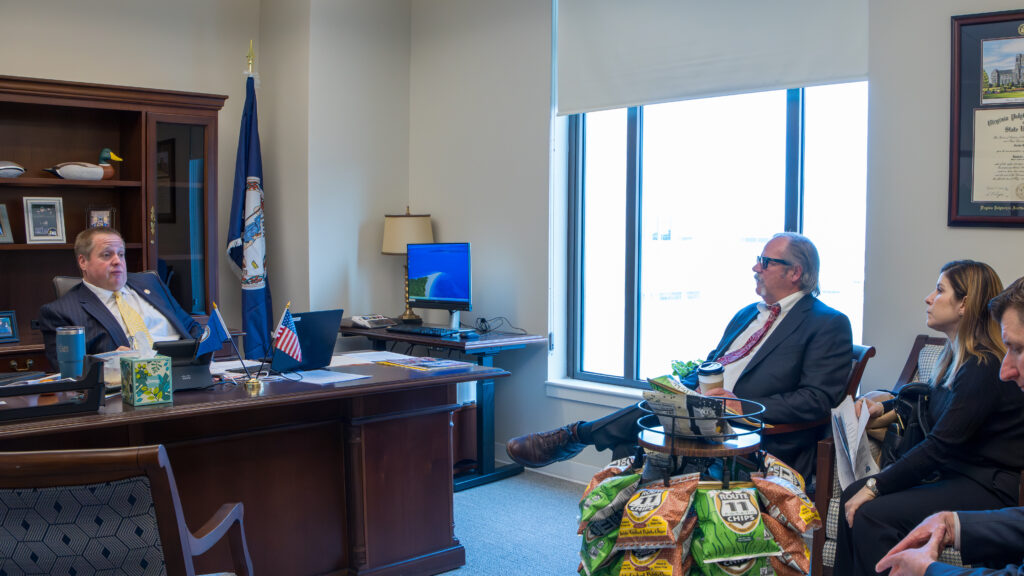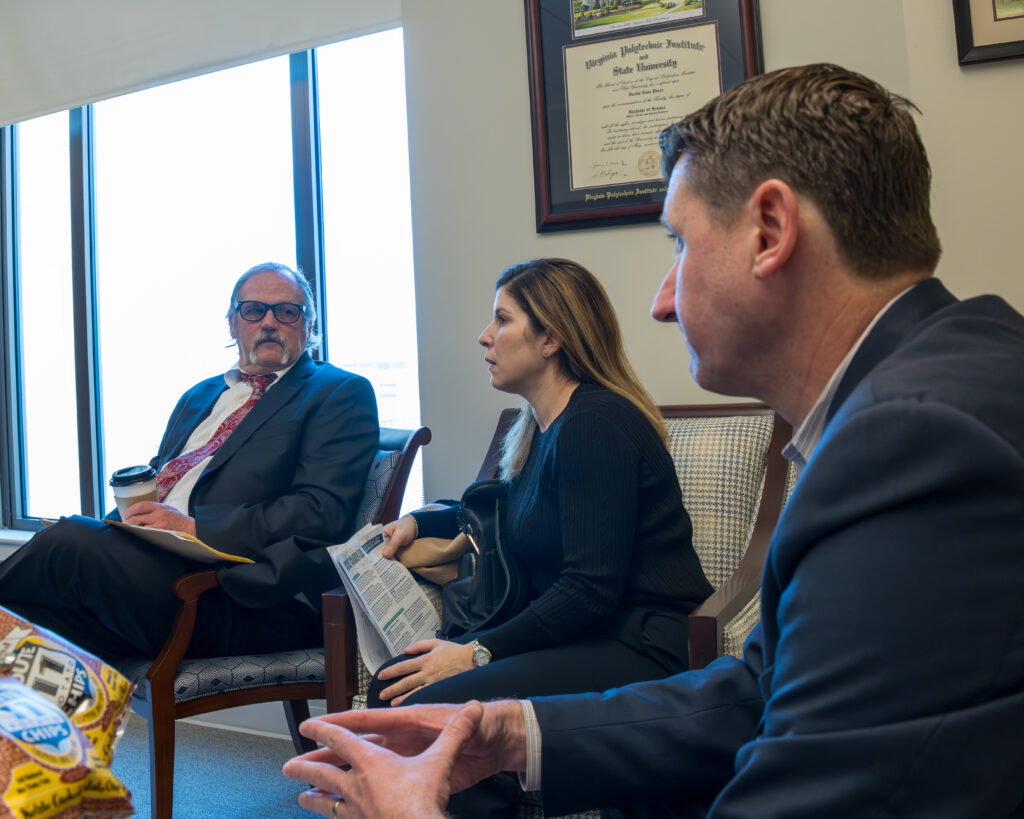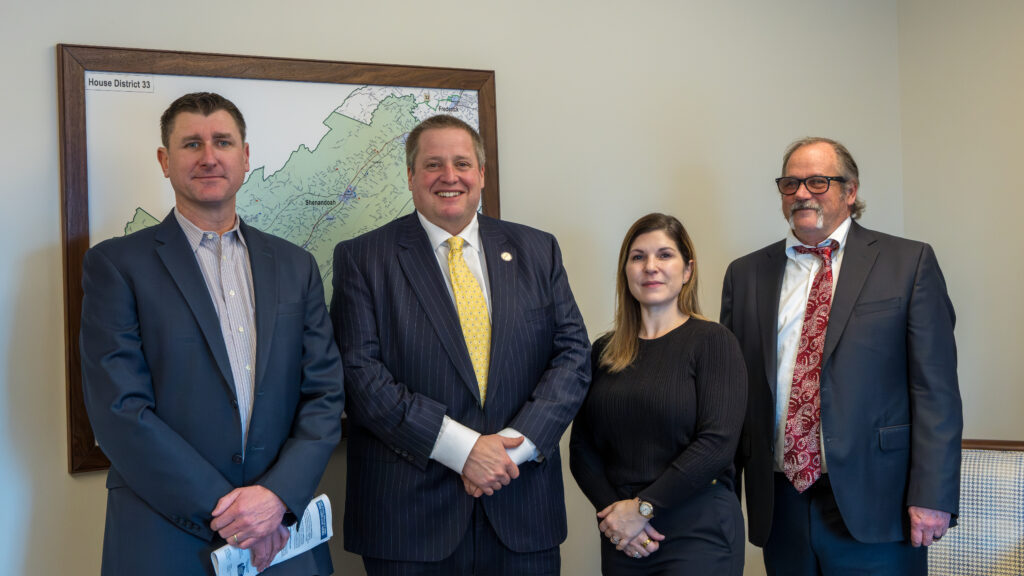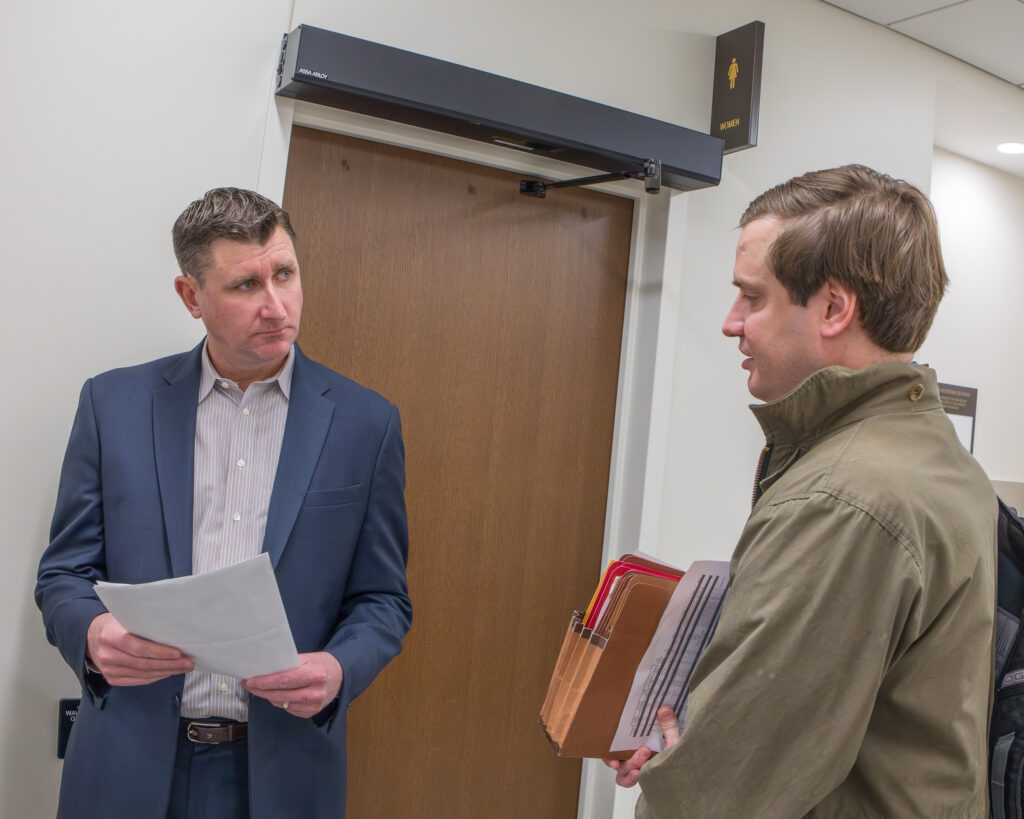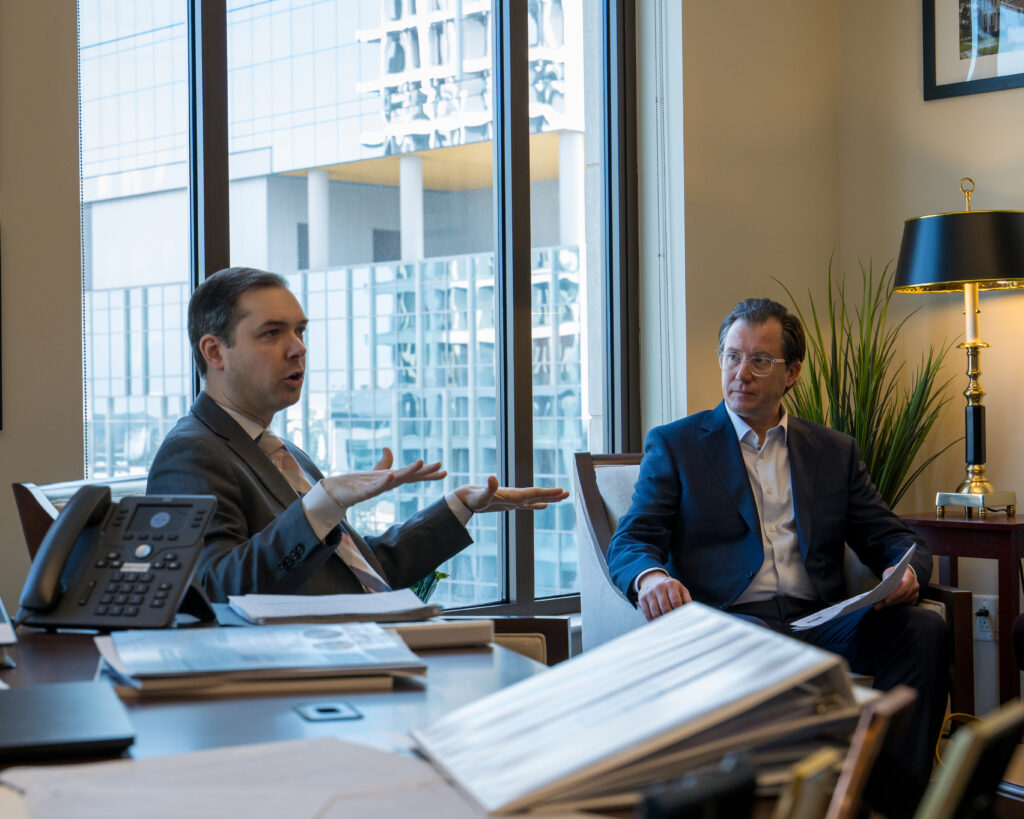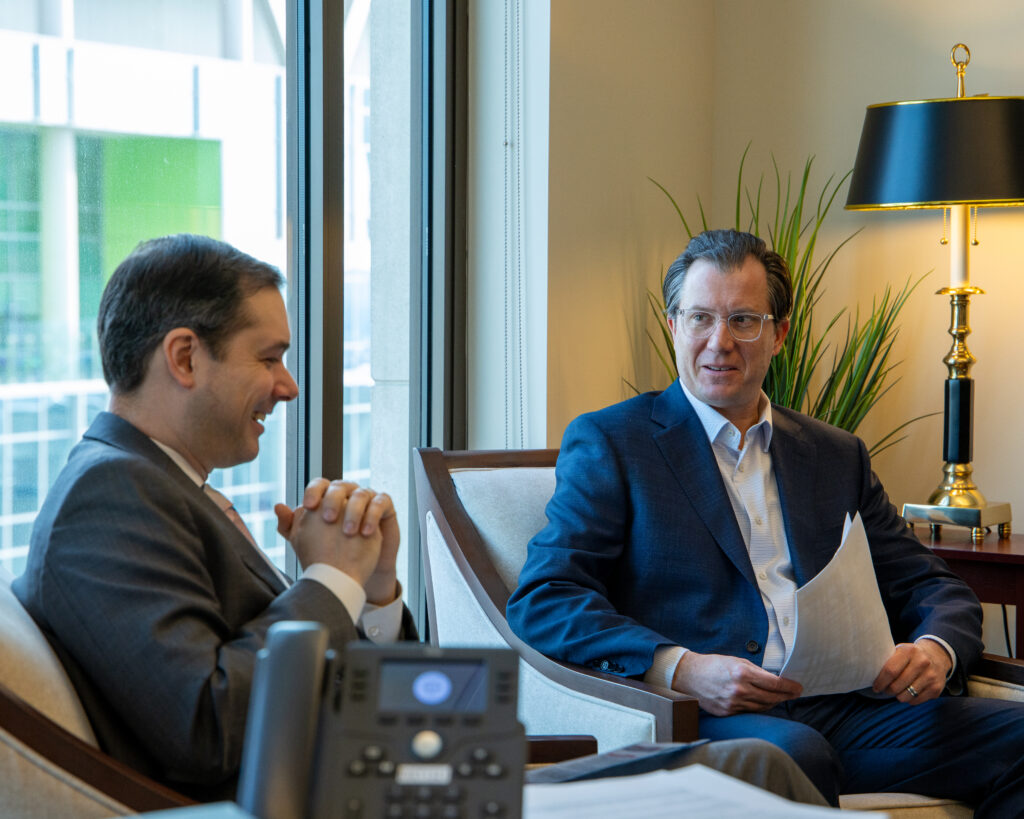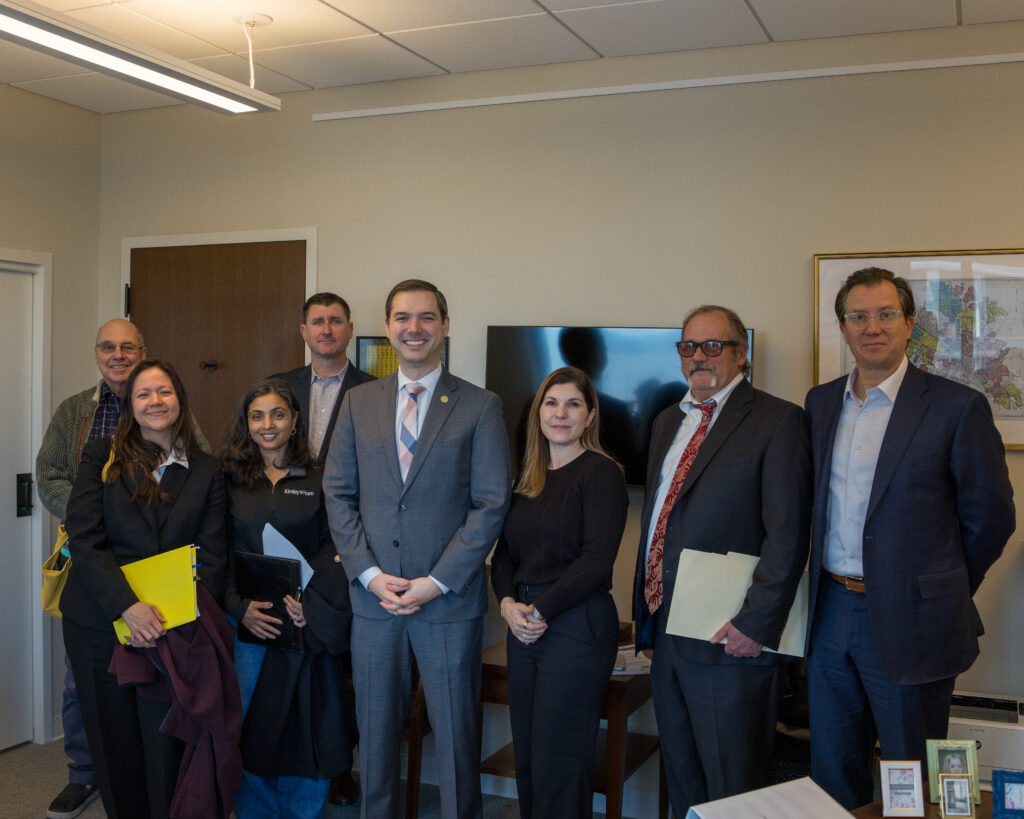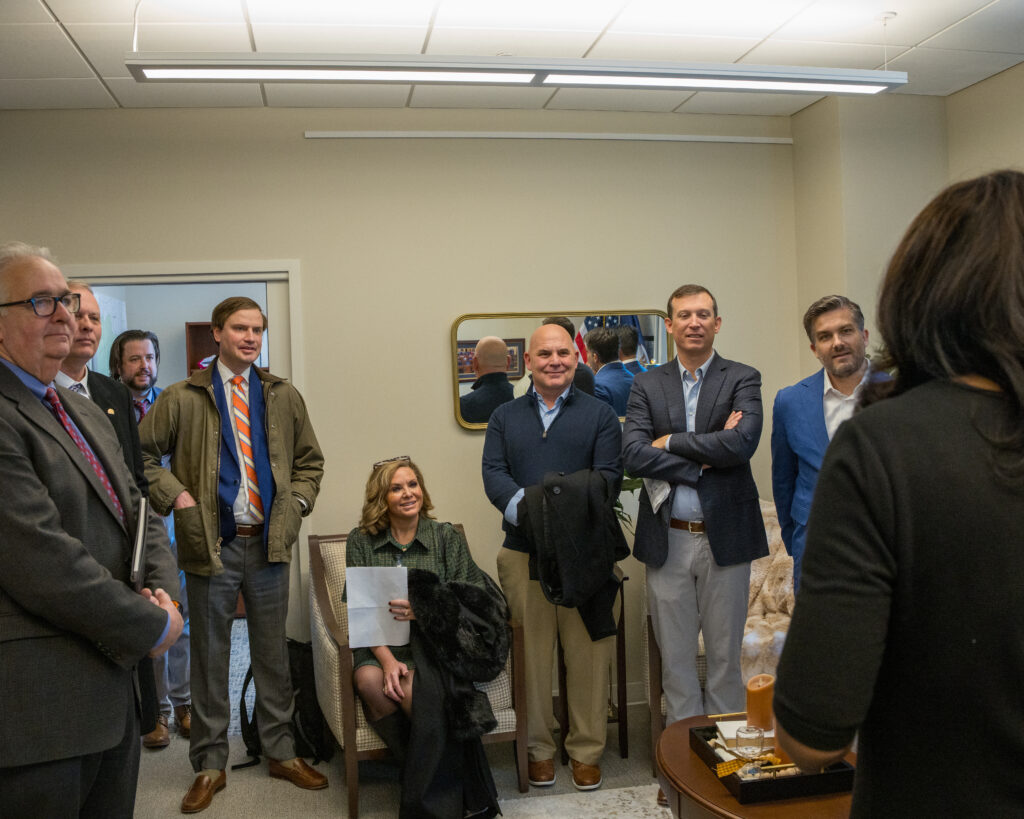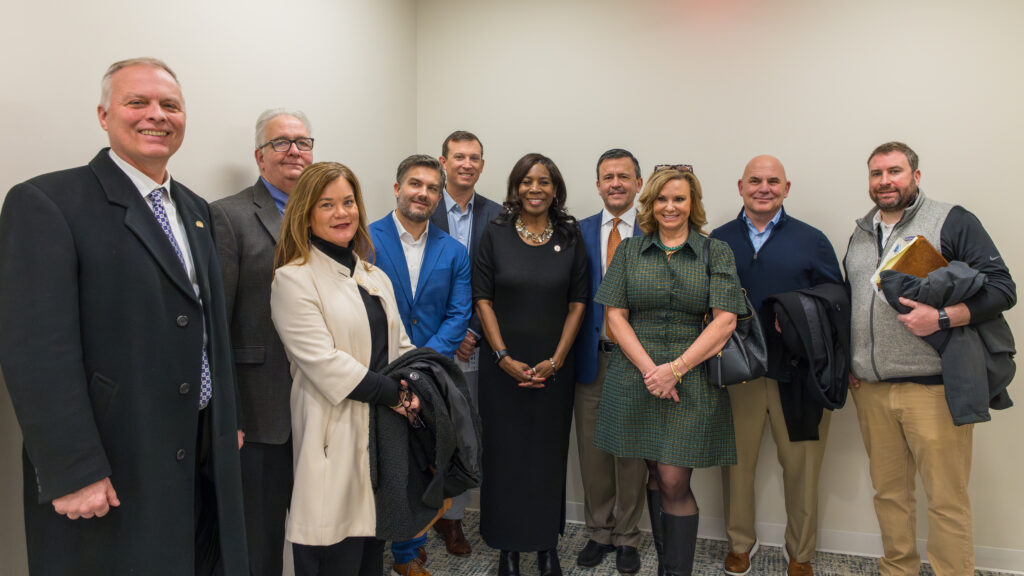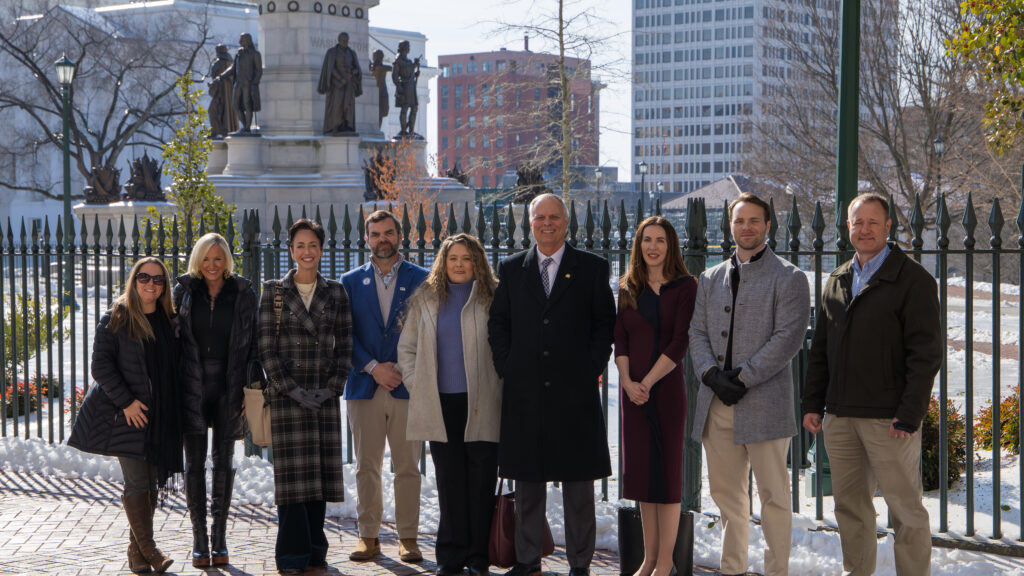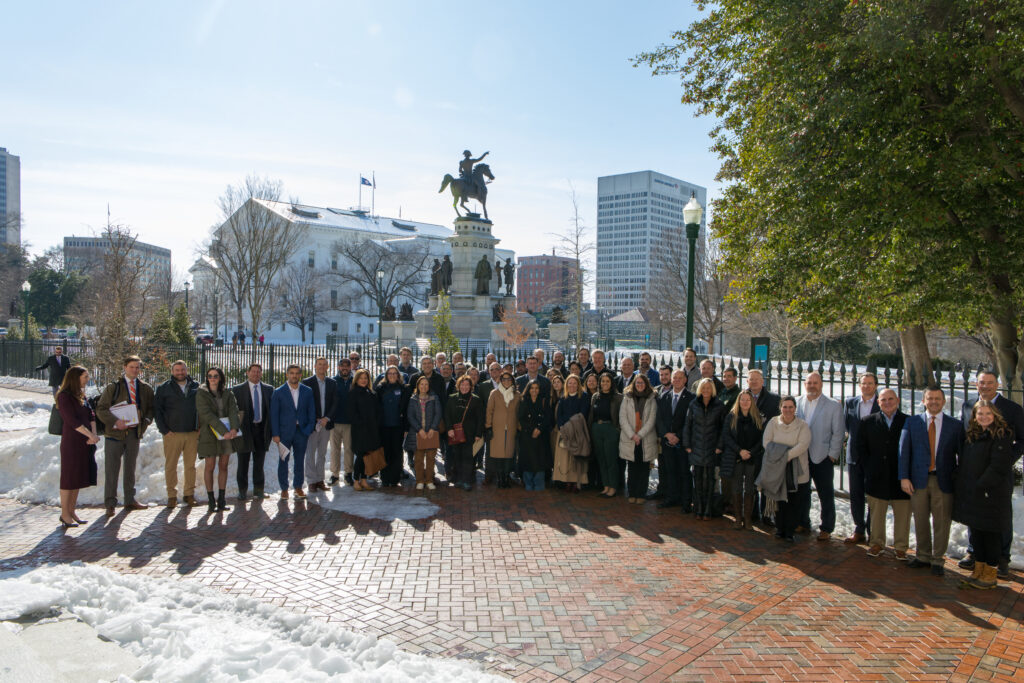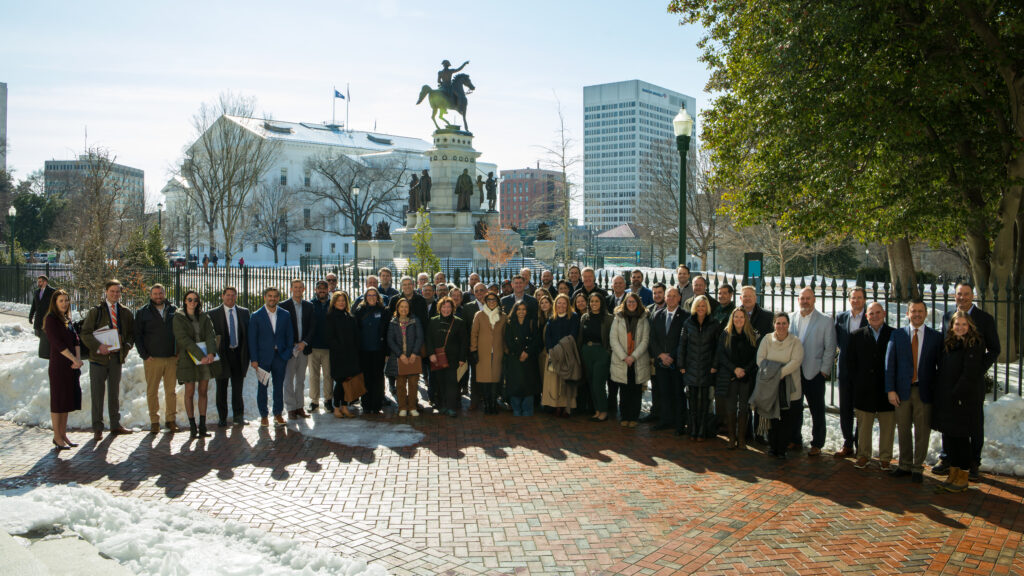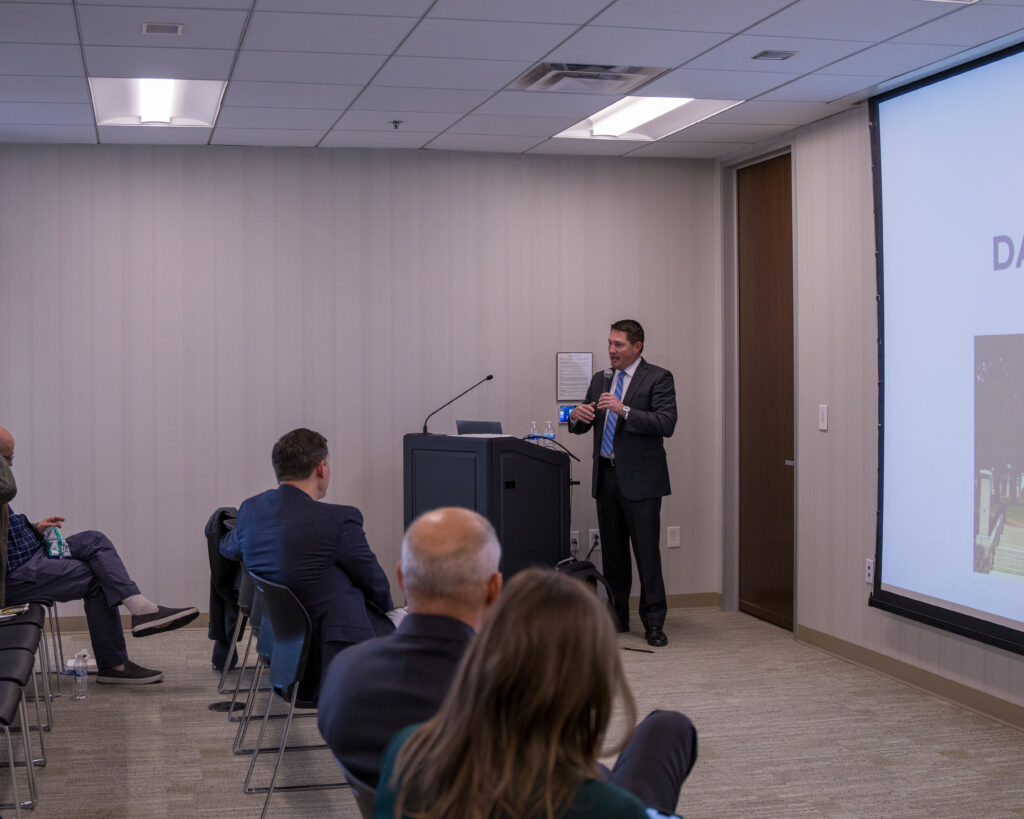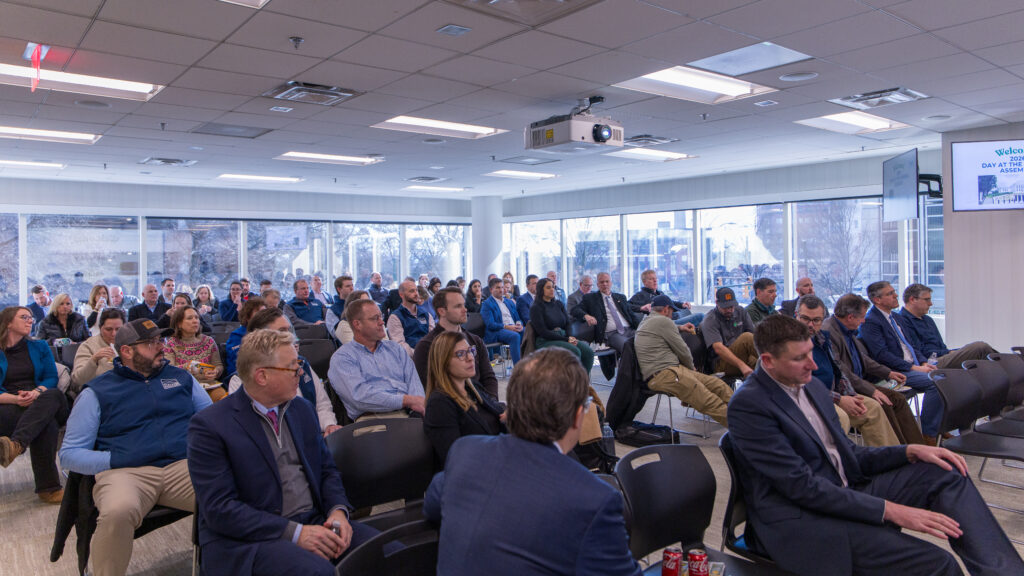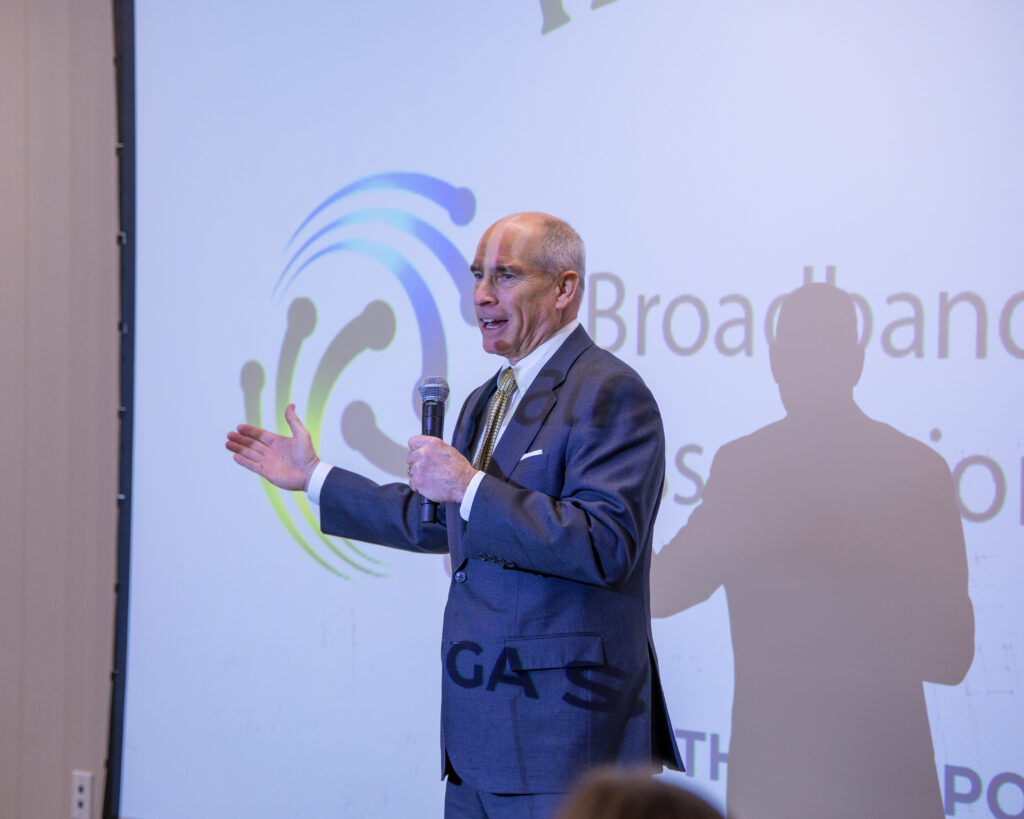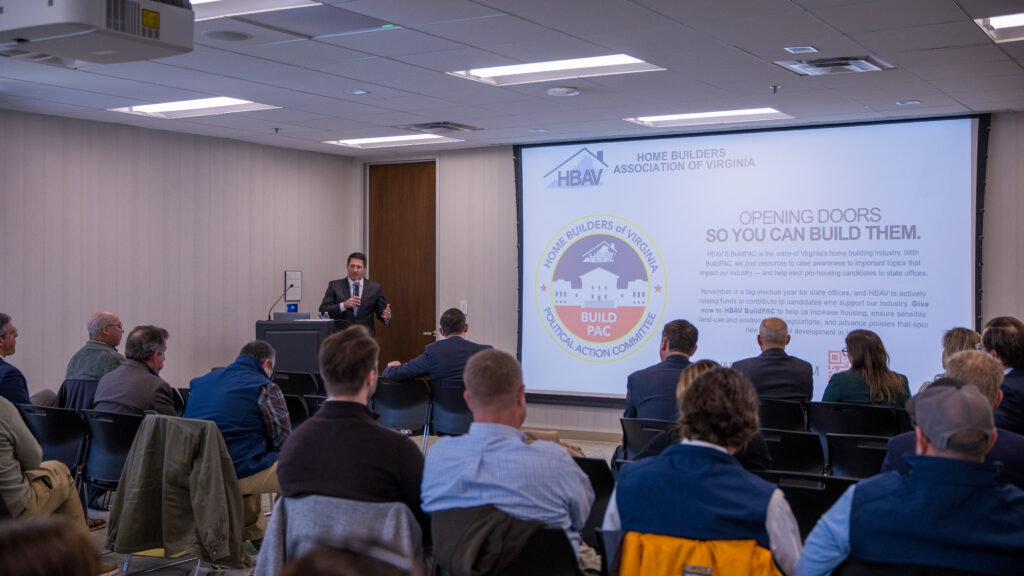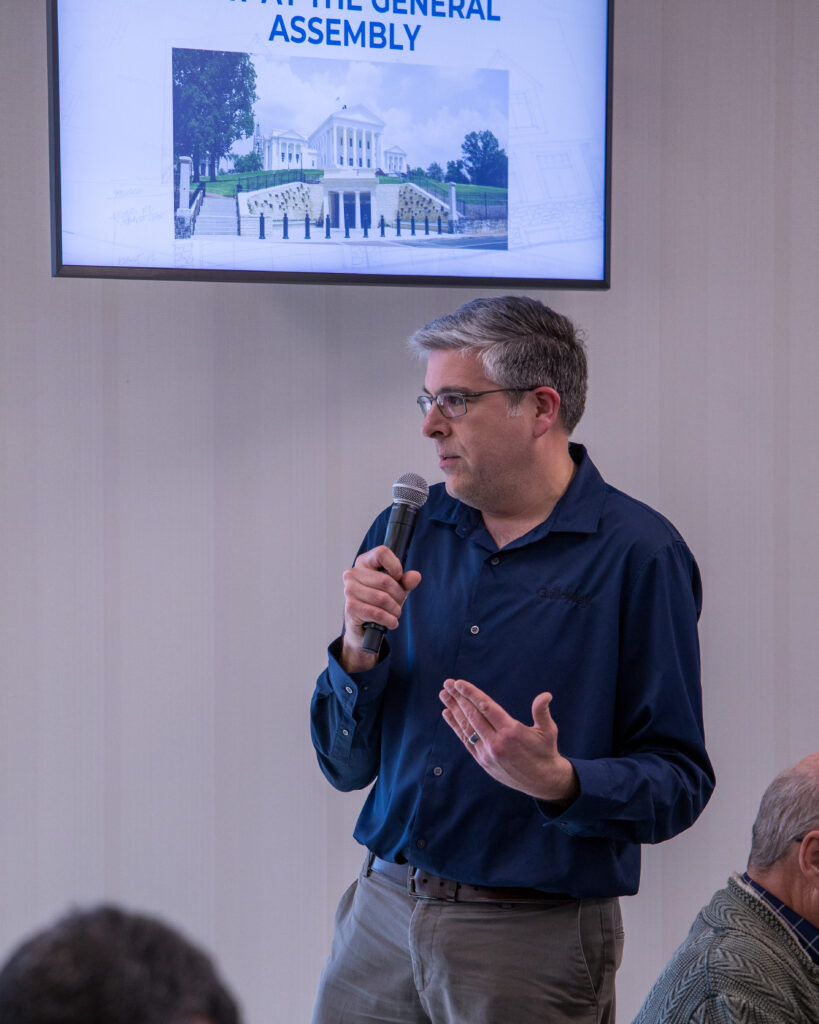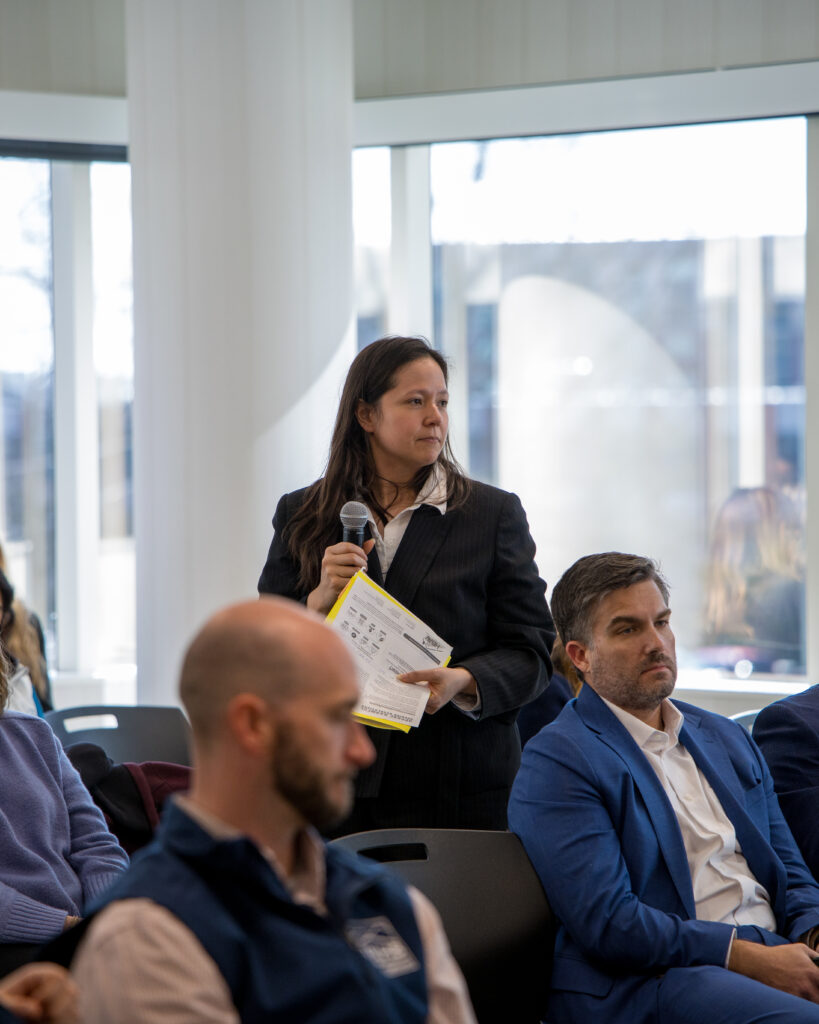

In what as an otherwise quiet week at the Capitol, home builders showed up to share firsthand perspectives on the current state of housing production.
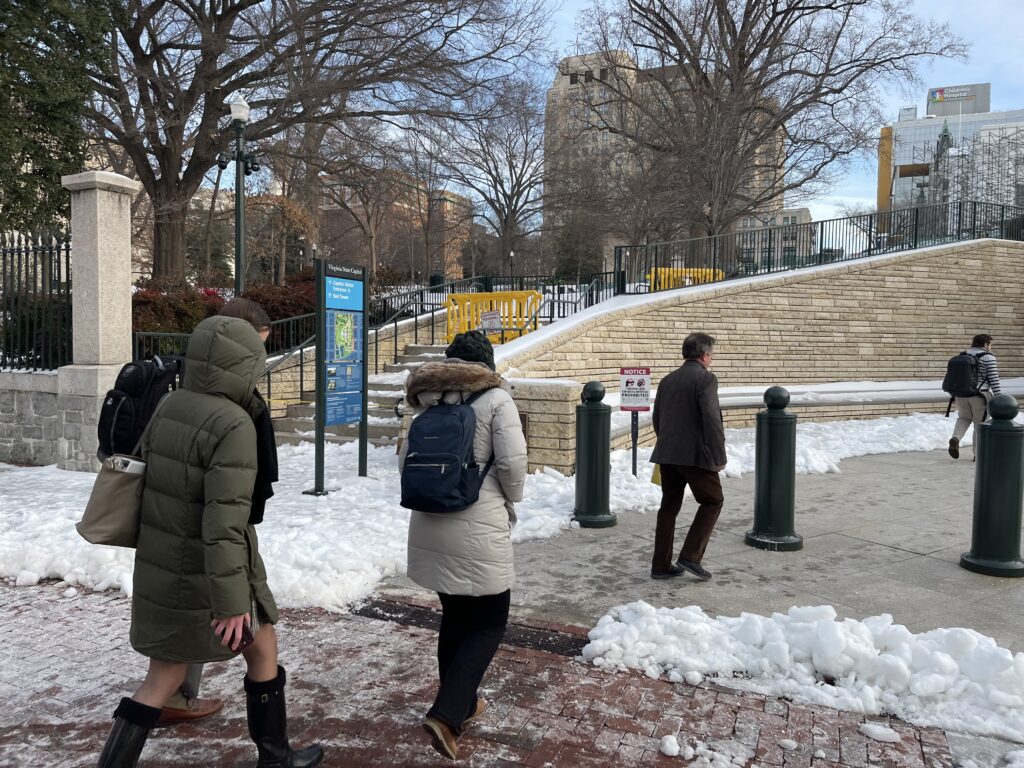
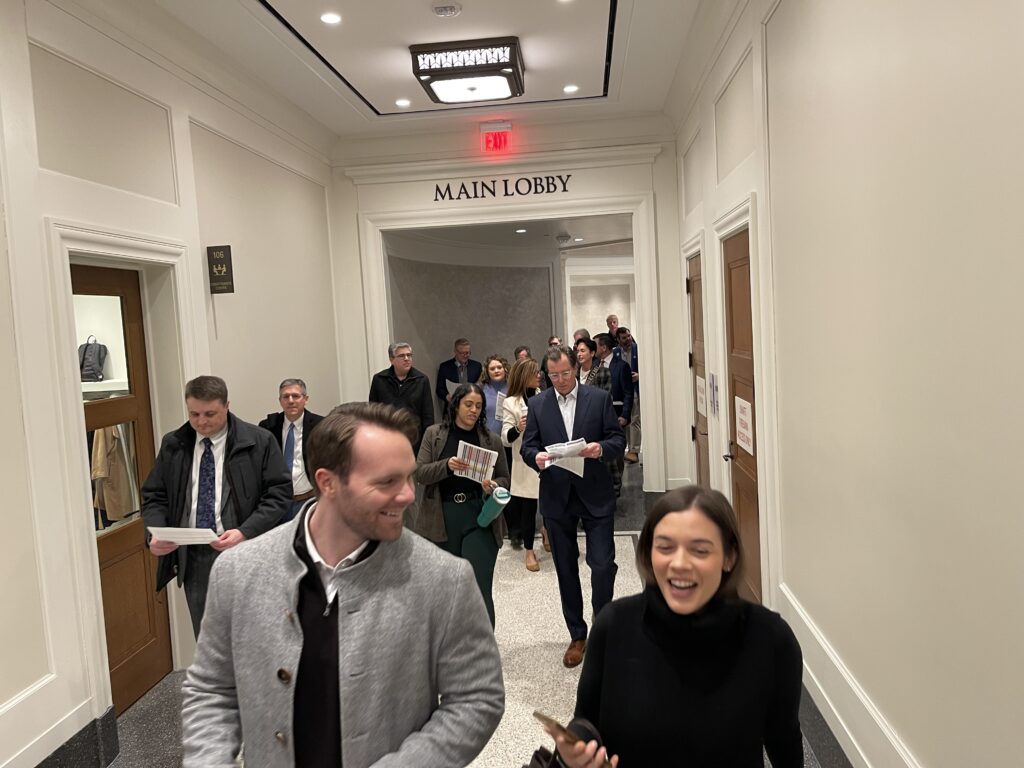
Bundled up and treading carefully, more than 100 home builders from across Virginia made their way to the Capitol grounds in Richmond for HBAV Day at the General Assembly on Wednesday. Snow and ice slowed much of the city. For members who were able to attend, the day remained focused on direct conversations with lawmakers about the policies shaping housing production across the Commonwealth. Participation was voluntary, and HBAV emphasized that safety comes first, fully supporting any member who chose not to travel due to weather conditions.

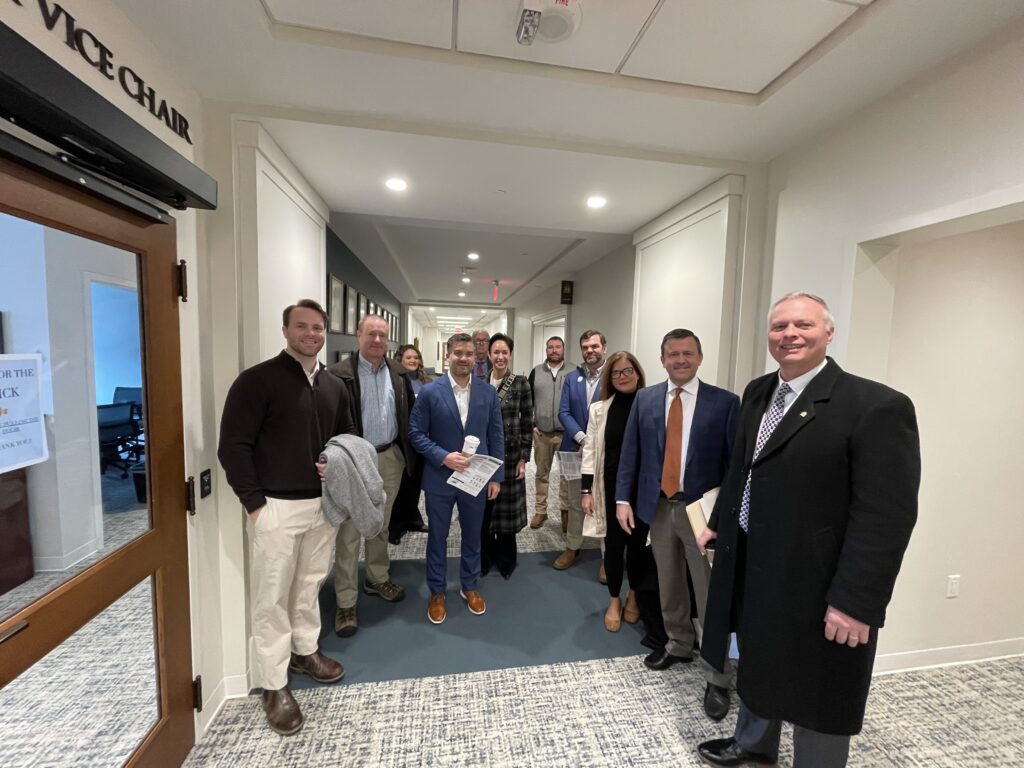
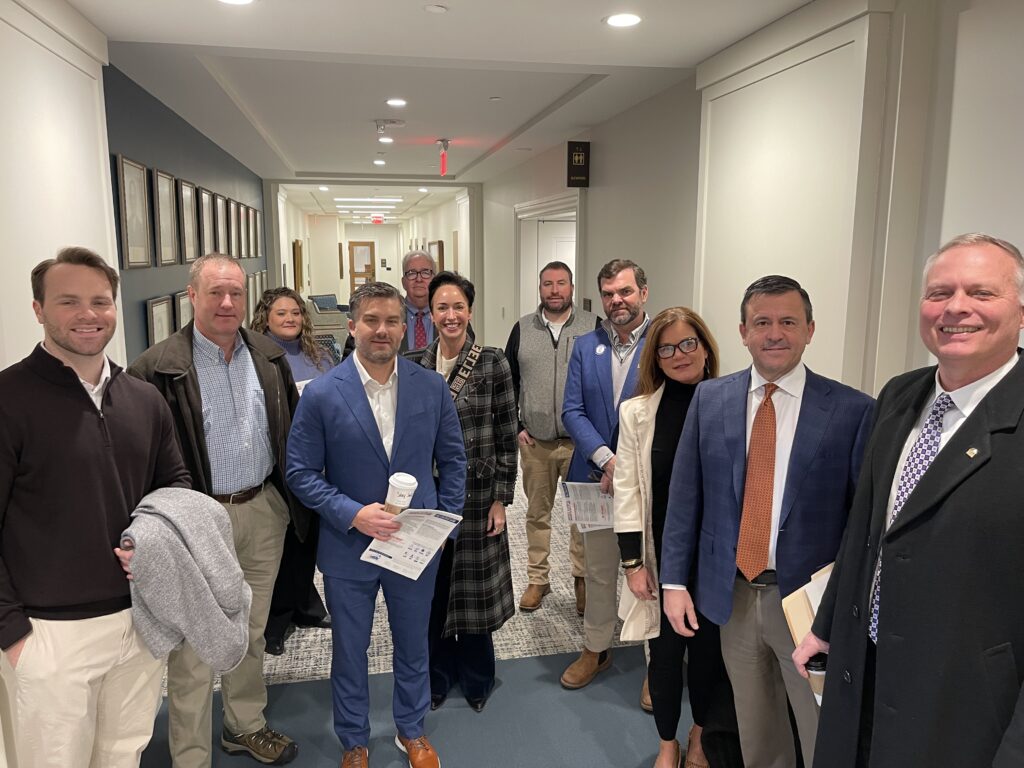
In nearly five dozen meetings with members of the Virginia General Assembly, builders shared real-world perspectives on the challenges facing residential development and the need for practical solutions that expand housing options for Virginians.
“It’s a really exciting day,” said Craig Toalson, CEO of HBAV, in a video interview at the General Assembly Building. Toalson said members spoke directly with legislators across the state to “talk about the barriers to housing production, what’s holding us back and solutions to help us produce homes for more Virginians.”
During those meetings, home builders shared data and context, including:
- Home costs that are rising faster than incomes, putting pressure on families across Virginia
- The growing 100,000-unit shortfall in the state
- The reality that a $1,000 price increase can push 4,000+ families out of the market
- The median home price has topped $400,000
The conversations took place during a quieter legislative week at the Capitol, with weather disrupting some committee activity. Even so, HBAV’s government affairs team continued to closely monitor legislation moving through both chambers. This included proposals that could impact residential development. Members can find more detail in the “Additional Legislation Tracked by HBAV” section of this week’s update.


Looking ahead, next week, the second-to-last week before Crossover, may be the final week for some committees to meet, including the House Counties, Cities and Towns Committee. HBAV will continue tracking legislation throughout the session and sharing timely updates with members.
Read our Legislative One-Pager
& Watch Toalson’s Video Message
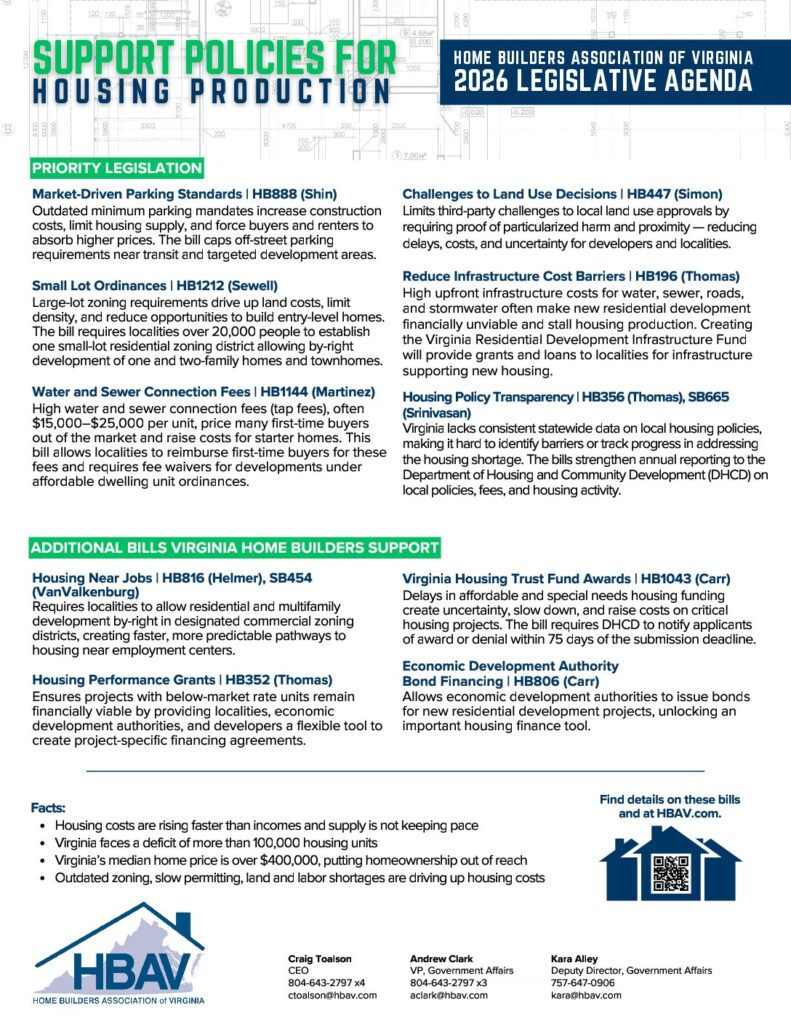
HBAV’s 2026 Legislative Agenda
HBAV’s 2026 Legislative Agenda focuses on removing state and local barriers to housing production, investing in critical infrastructure to support new residential development, increasing transparency into local housing policies, and protecting critical residential economic development incentives.
Please follow the HBAV blog for the latest on our 2026 Legislative Agenda throughout this session:
Remove Regulatory Barriers to Housing
Market-Driven Parking Standards | HB 888 (Shin)
The Challenge: Outdated minimum parking mandates remain a significant cost driver and barrier to housing production. Many localities require more parking than the market demands, increasing construction costs that are ultimately passed on to homebuyers and renters. Excessive parking requirements also consume land that could otherwise be used for housing, reducing the number of units that can be built on a site.
What Our Bill Does: HB 888 caps minimum off-street parking requirements for projects near mass transit and public transportation, within certain residential, mixed-use, and revitalization zones, and certain affordable housing developments. The bill also requires certain localities to administratively approve minimum off-street parking reductions of at least 20% in specified areas.
Status: Passed House Counties, Cities, and Towns Committee 15-6.
Small Lot Ordinances | HB 1212 (Sewell)
The Challenge: In many Virginia communities, zoning rules limit housing options by requiring large lots and low densities, even where demand is strongest. These requirements raise per-home land costs, restrict housing near employment and transit, and reduce opportunities to build entry-level homes.
What Our Bill Does: Requires localities with populations over 20,000 to create at least one small-lot residential zoning district that allows one- and two-family dwellings and townhomes by-right on lots of 3,000 square feet or less. Localities must implement this new district in a way that increases by-right residential development capacity compared to what was previously allowed.
Status: Referred to House Counties, Cities, and Towns Subcommittee #2 which is chaired by the bill patron (Delegate Sewell), to be heard next week.
Housing Near Jobs: Multifamily in Commercial Districts | HB 816 (Helmer) and SB 454 (VanValkenburg)
The Challenge: Housing demand has outpaced supply for decades, particularly near employment centers and transportation corridors. In many jurisdictions, new residential and multifamily development is subject to lengthy rezoning processes that add months or years of delay, increase pre-construction costs and deter investment where housing is most needed. Expanding opportunities for by-right residential and multifamily development in commercial districts would reduce approval timelines and accelerate housing production near job centers.
What Our Bill Does: The bill requires localities to allow residential and multifamily development by-right in designated commercial zoning districts, eliminating the need for discretionary rezoning approvals and enabling faster, more predictable pathways to housing production.
Status: HB816 passed the House 64-35 (party line); SB454 referred to Senate Committee on Local Government, to be heard on Monday morning.
Reduce Infrastructure Cost Barriers
Residential Development Infrastructure Fund | HB 196 (Thomas)
The Challenge: Infrastructure costs — water, sewer, roads, and stormwater systems — are a major barrier to new residential development. These upfront investments can make housing projects financially unviable, particularly in areas where new infrastructure is needed to support growth. Without dedicated funding to help localities expand capacity, housing production stalls and communities miss opportunities to attract residents and businesses that drive economic growth.
What Our Bill Does: HB 196 would create a Virginia Residential Development Infrastructure Fund to provide grants and loans to localities for water, sewer, stormwater, and transportation infrastructure needed to support new residential development. The fund would be managed by the Virginia Resources Authority in coordination with the Department of Housing and Community Development (DHCD).
Status: Reported from House Appropriations with a substitute, meaning the committee approved a revised version that would create a pilot program in Hampton Roads.
Water and Sewer Connection Fees | HB 1144 (Martinez)
The Challenge: In many Virginia communities, connection fees now exceed $15,000-$25,000 per unit, pricing first-time buyers out of homeownership and adding significant upfront costs to starter home construction.
What Our Bill Does: The bill allows localities to fully or partially reimburse first-time homebuyers for water and sewer connection fees, capital recovery charges, and availability fees for new residential developments. It additionally requires localities with an affordable dwelling unit ordinance to waive these fees and charges for developments subject to the ordinance.
Status: Passed House Counties, Cities, and Towns Committee as amended (changed from mandatory to permissive).
Increase Transparency and Streamline Processes
Local Housing Policy Transparency | HB356 (Thomas) and SB665 (Srinivasan)
The Challenge: Virginia lacks consistent, statewide data on local housing policies and development activity. Without reliable information on land-use regulations, development standards, and housing production, policymakers cannot effectively identify barriers to housing or measure progress toward addressing the shortage.
What Our Bill Does: Strengthens annual reporting requirements to the Department of Housing and Community Development (DHCD) summarizing changes to local policies, ordinances, fees, and processes affecting residential development, along with data on housing applications, approvals, and related studies. Reports are standardized by DHCD and made publicly available.
Status: Unanimously passed House General Laws Committee (21-0); passed Senate General Laws Housing Subcommittee, onto full Committee next week.
Virginia Housing Trust Fund Awards | HB 1043 (Carr)
The Challenge: Affordable and Special Needs Housing funding decisions can take months to finalize, creating uncertainty for applicants and slowing down housing projects that rely on timely award decisions.
What Our Bill Does: This bill directs the Department of Housing and Community Development (DHCD) to review all applications and notify each applicant of an award or denial no later than 75 days after the application submission deadline. It also designates DHCD as responsible for providing applicants initial notice of award or denial before any public announcement is made.
Status: Referred to House General Laws Housing Subcommittee.
Preserve & Expand Critical Housing Incentives & Financing Tools
Economic Development Authorities, Bond Financing | HB 806 (Carr)
The Challenge: Under current law, many economic development authorities cannot issue bonds to finance new residential construction projects. Economic development authorities can be an important financing tool for the housing industry.
What Our Bill Does: HB806 allows all economic development authorities to issue bonds to finance new residential development projects.
Status: Unanimously reported from Subcommittee, onto full Committee next week.
Third-Party Challenges to Land Use Decisions | HB 447 (Simon)
The Challenge: Over the past several years, the Virginia Supreme Court has expanded the ability for third parties to challenge local land use approvals, delaying projects, adding costs, and creating uncertainty for both localities and the development community.
What Our Bill Does: HB447 codifies a decades-old two-prong test that requires third parties to show a particularized harm and proximity to the property to challenge these approvals, ensuring that the development community can rely upon legally-approved zoning cases.
Status: Referred to House Counties, Cities and Towns Committee.
Housing Performance Grants | HB 352 (Thomas)
The Challenge: Industry and local governments need additional, flexible financing tools to increase the supply of for sale and rental housing. Research has shown that incentives that offset rising land costs are more effective than mandates.
What Our Bill Does: HB352 provides localities, economic development authorities, and the housing industry an innovative new tool to create project-specific financing agreements that ensure projects with below-market-rate units remain financially viable.
Status: Passed House 78-21. Vote details can be found here.
Additional Legislation Tracked by HBAV
Rent Control | HB 278 (Clark), HB 1177 (Cole), SB 355 (Boysko)
Allows localities to pass ordinances limiting the amount that rents can be increased from year to year. This would lead to a decrease in the quality and quantity of available rental housing, discourages new construction investment, and exacerbates housing shortages.
HBAV’s Position: Oppose
Status: Defeated (continued to 2027 Session); referred to Committee on House General Laws; and referred to Committee on Senate Local Government, respectively.
Impact Fees | HB 536 (Hamilton), HB 1430 (Cousins)
Impact fees raise upfront development costs, which are ultimately passed on to homebuyers and renters, making housing less affordable. They also discourage or delay new construction, reducing housing supply and worsening shortages.
HBAV’s Position: Oppose
Status: Passed by Indefinitely (effectively defeated); referred to House Counties, Cities, and Towns.
Inclusionary Zoning | SB 74 (McPike), HB 867 (Cousins), HB 181 (Rasoul)
Allows localities to create mandatory affordable housing dwelling unit programs. This discourages development and will exacerbate the shortage of missing middle-housing supply.
HBAV’s Position: Oppose
Status: Referred to Senate Local Government Committee; reported with amendments (with a reenactment clause that requires the legislature to favorably pass the measure again in 2027) from House CC&T Subcommittee 6-0; passed House with reenactment language 93-5. The reenactment clause means the bill would not take effect unless it is passed again by the General Assembly in 2027. If it does not receive a second approval, the measure would not become law.
Mandatory Adoption of Latest Energy Code | HB 377 (Bennett-Parker)
Would unravel Virginia’s Building Code adoption process through legislation, requiring immediate adoption of international energy code. Virginia ranks high in building code adoption and enforcement compared to other states. Virginia Building Code updates incorporate and amend for these international provisions to improve energy performance through enhanced standards for insulation, windows, lighting, ventilation, and HVAC sizing compared to older rules.
HBAV’s Position: Oppose
Status: Referred to House General Laws Housing Subcommittee
Adequate Public Facilities | SB 781 (Sturtevant)
Allows local governments to deny or delay rezoning requests solely because they determine existing public facilities are inadequate to support new development. This gives localities broad discretion to block or indefinitely delay rezoning — creating uncertainty, increasing costs, and restricting housing supply even when developers are willing to help fund or phase in needed infrastructure.
HBAV’s Position: Oppose
Status: Referred to Senate Local Government.
Want HBAV to hear your take? Fill out our survey. Your input helps shape HBAV’s approach to housing policy in Virginia.