
This article is from HBAV's historical archive. Some formatting may differ from current articles.
George Mason University economist warns of storm clouds despite region’s strengths

George Mason University economist Keith Waters, Ph.D. admitted upfront that he didn’t have a rosy outlook to share with members of the Northern Virginia Building Industry Association, so he got right into it.
Framing his talk at Monday’s NVBIA Governor’s Breakfast around sluggish job growth, shrinking federal employment, and a housing bottleneck, the assistant director of the Center for Regional Analysis and director at the Stephen S. Fuller Institute at the Schar School of Policy and Government shared data-backed analysis that was sobering and candid to a crowd of home builders. Virginia Gov. Glenn Youngkin was also in the crowd.
Not just COVID: 2011 Act pushed people out
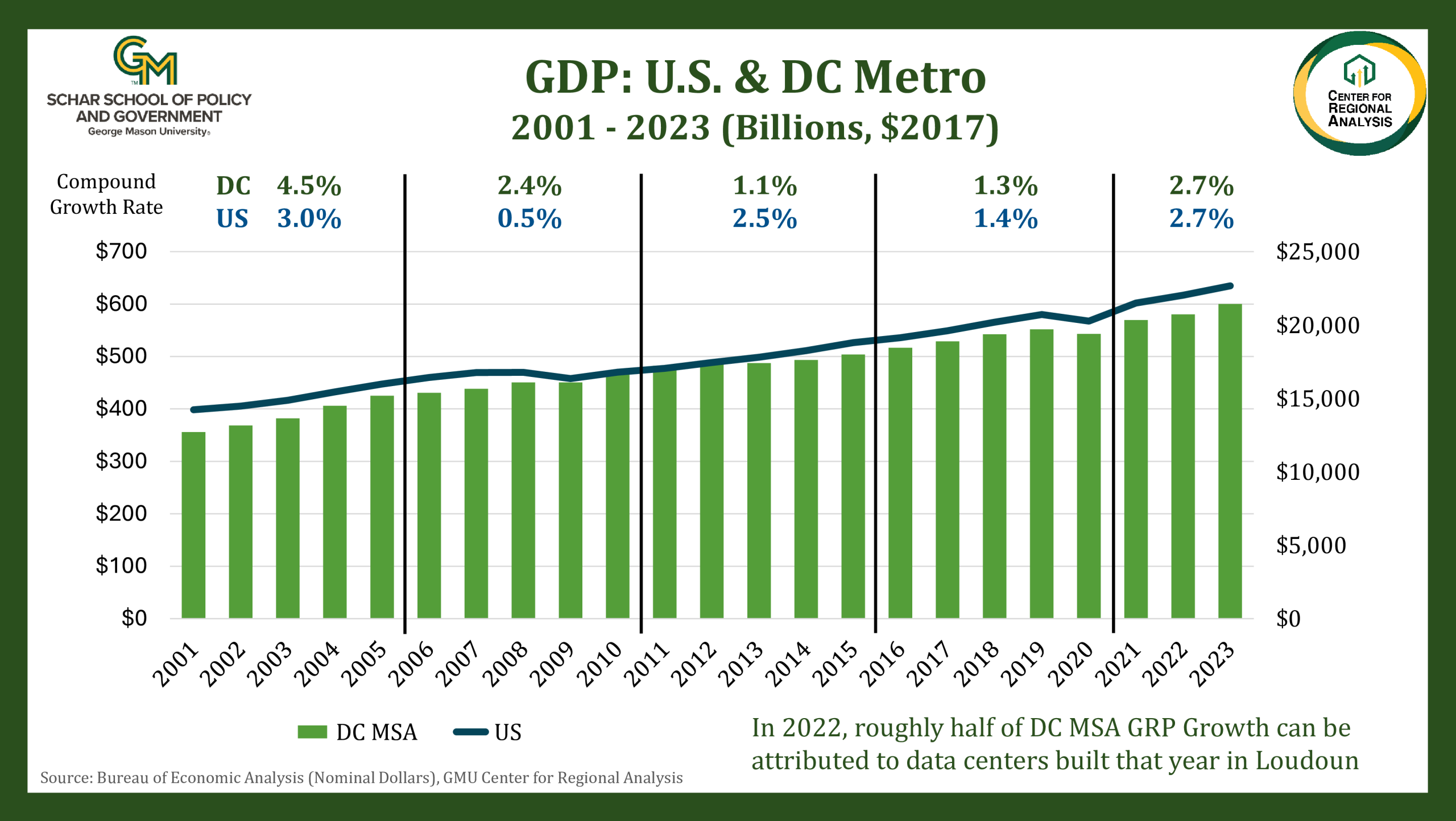
Waters first looked at the Budget Control Act of 2011, which was aimed at reducing the federal deficit in the midst of a debt ceiling crisis and imposed heavy spending cuts on the federal government. The impact to the Washington metro area was felt in reduced federal spending with contractors, which led to job losses and hiring freezes.
Prior to the BCA, the D.C. metro area outperformed the national economy in terms of GDP.
But it was 2011 that migration into the area peaked at around 25,000 people. “We are a company town, [government work] is what we do, and when they stopped funding the region’s economy things slowed down. It had real economic consequences,” Waters said.
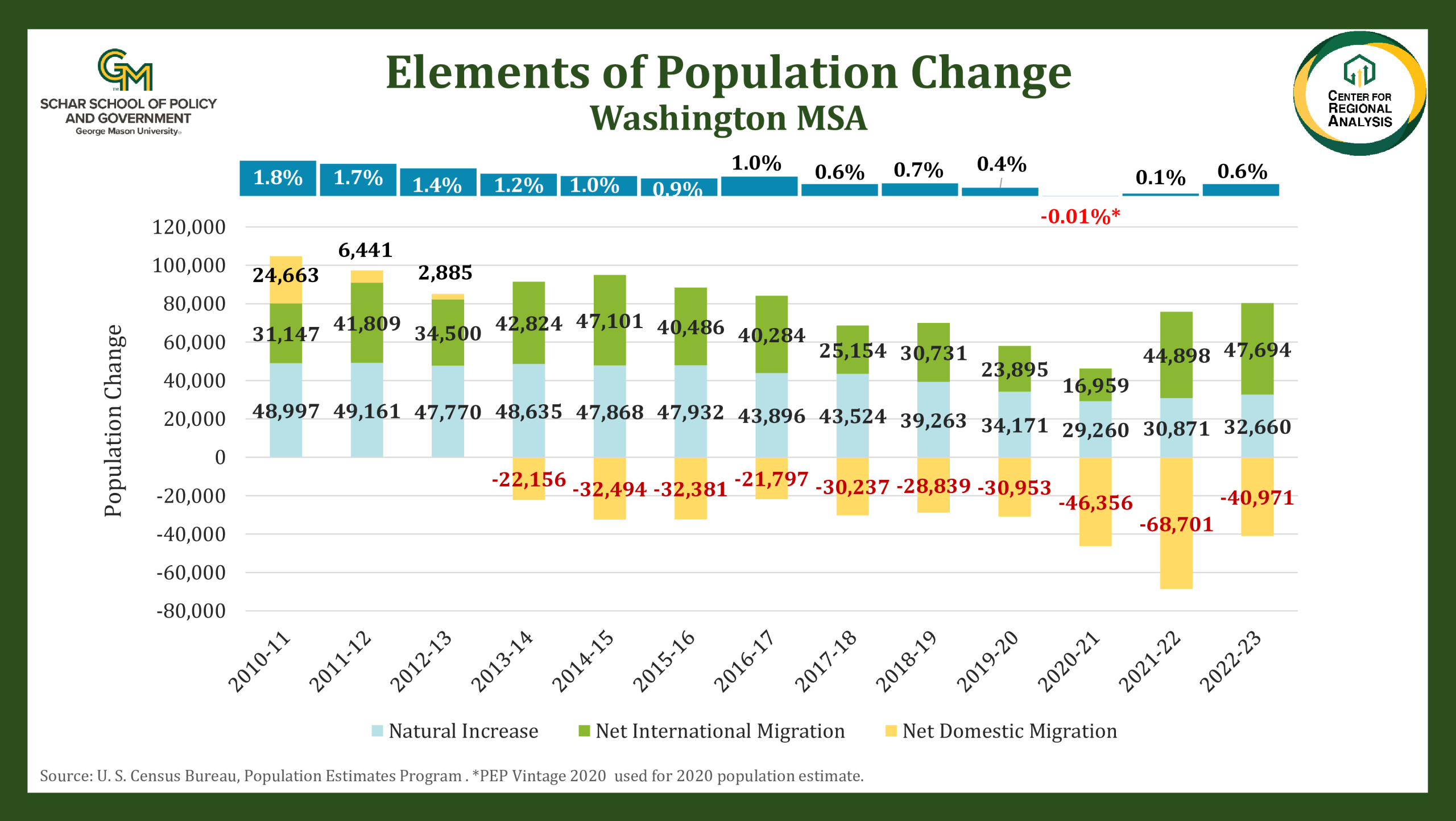
That trend stuck around and got worse for the next 10 years, the pandemic hit, and population losses exacerbated. Once remote work began, residents “found it more relatively attractive to live somewhere else. When they can Zoom into the office, why would they stay here?” Waters’ most recent data from 2022-2023 showed D.C. metro population growth of only 0.6% vs. 1.8% in 2010-2011, before the BCA.
Northern Virginia’s job market: A (relative) bright spot
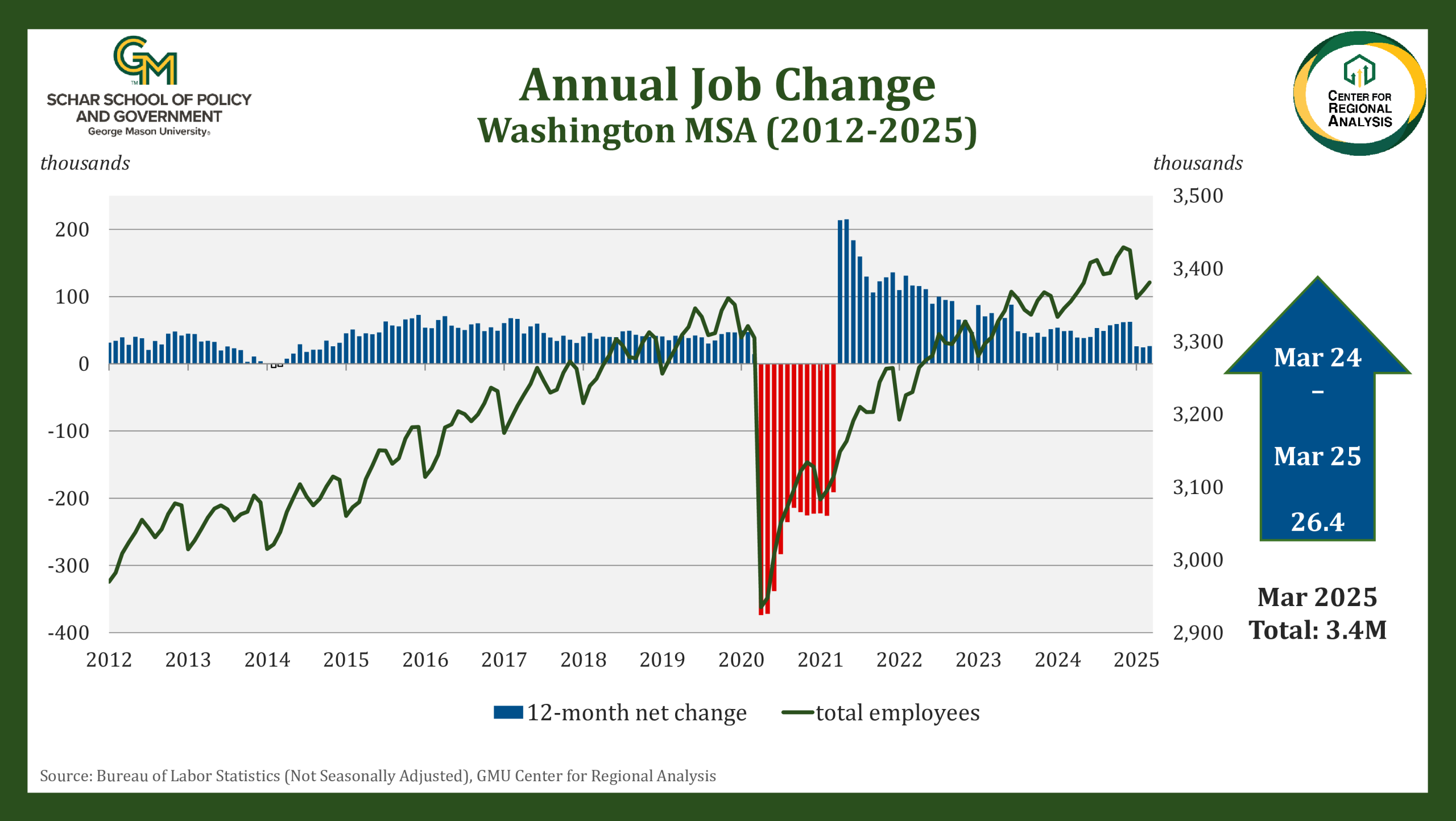
Since the pandemic, the broader region has barely grown payroll jobs—just 0.6% above pre-pandemic levels.
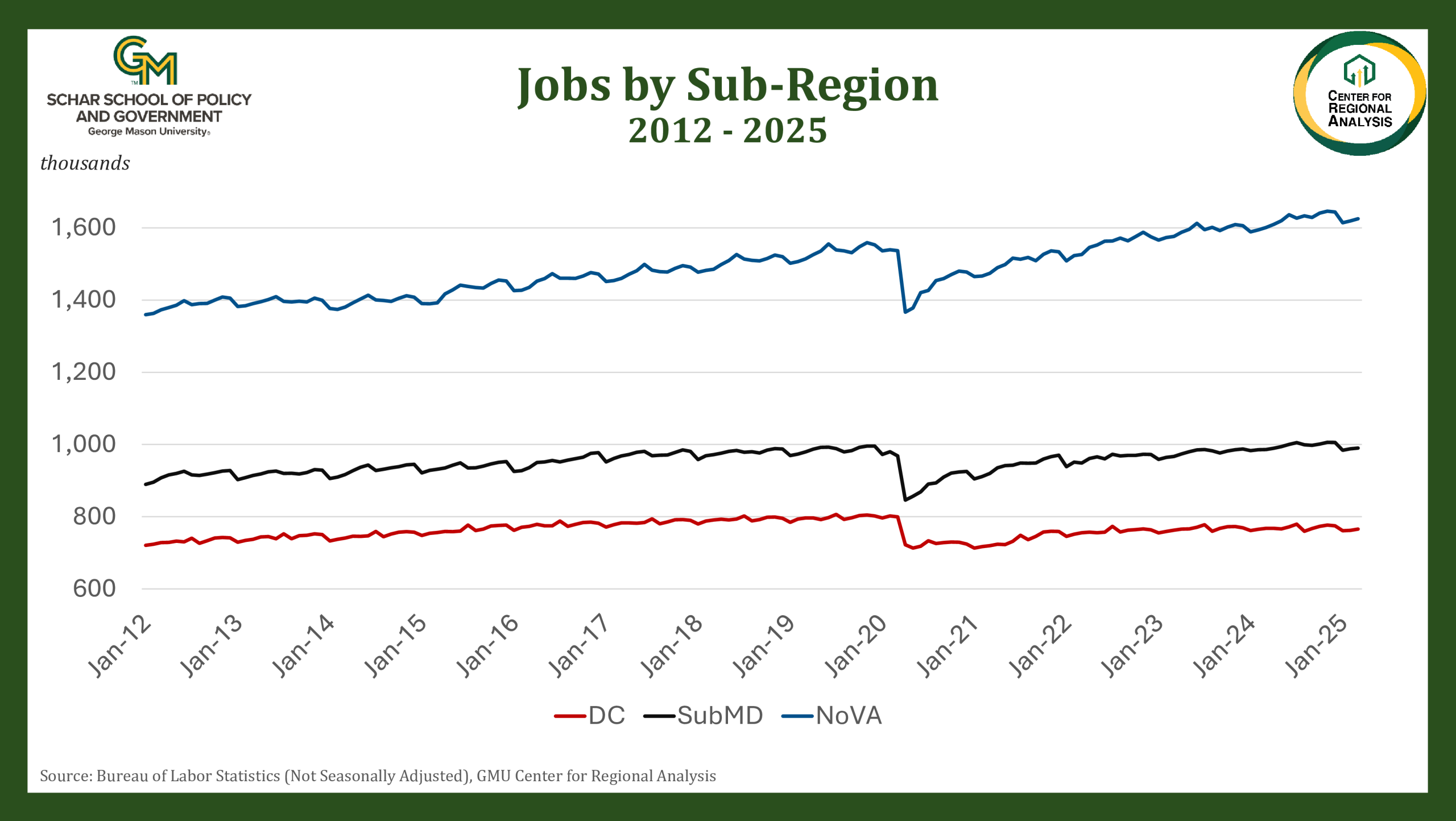
Northern Virginia, however, has outperformed the rest of the metro area, and makes up 48% of the D.C. area jobs (up from 46% pre-pandemic). NoVA also outpaces the U.S. average in payroll job growth.
But there’s a catch, Waters said.
The new jobs being added are increasingly lower-paying, meaning Northern Virginia is “becoming more mediocre” in economic output,” he said. “The jobs that we’re adding are lower-income jobs, so the U.S. is catching up to us more rapidly than it has in the past.”
Waters pointed to two major challenges on the horizon:
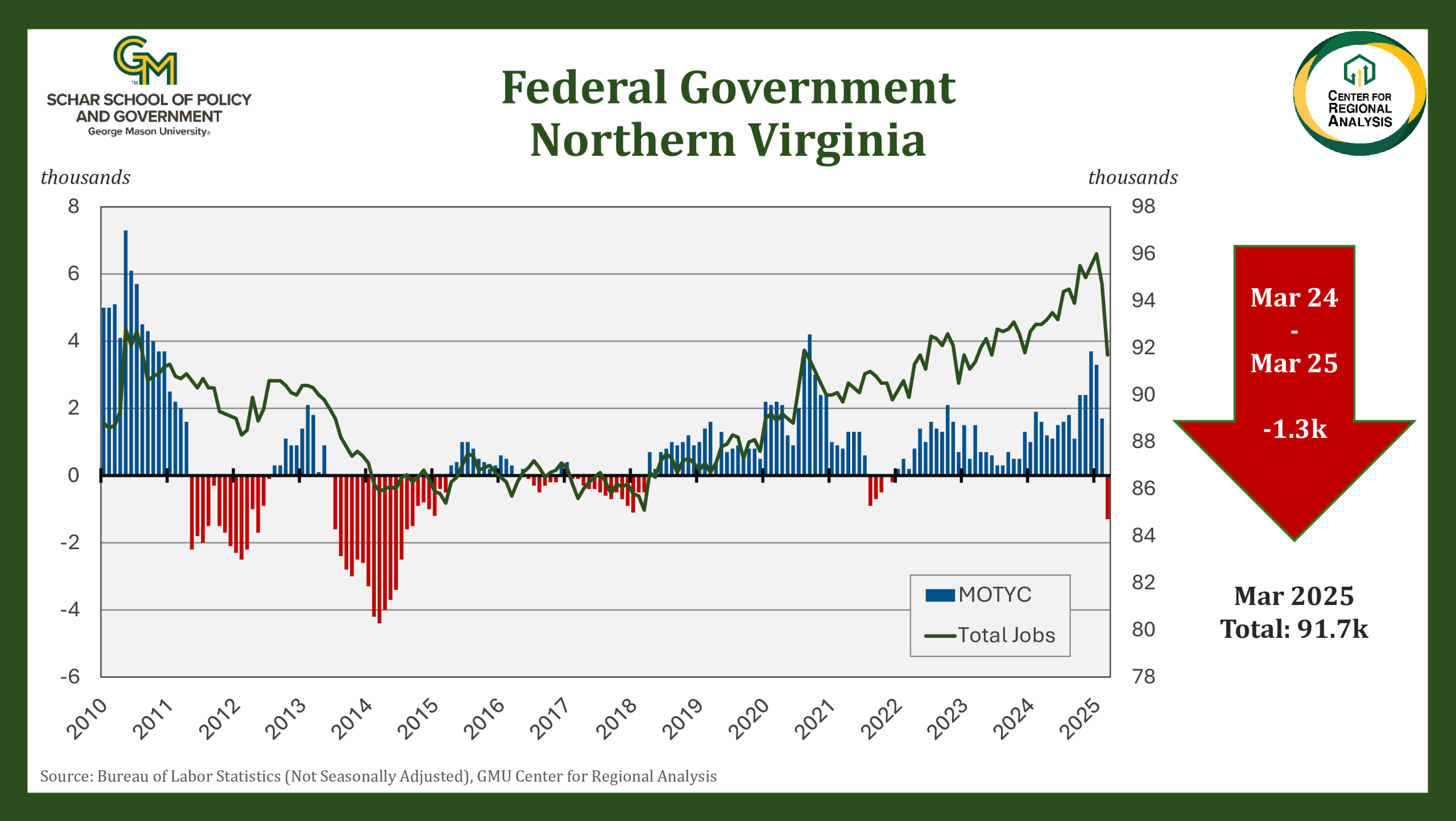
- Shrinking federal employment: Direct federal employment is down 1,300 federal jobs from March 2024 and March 2025. Government efficiency reforms are making job reductions more permanent, with fewer lateral transfers within agencies.
- Falling federal contracting: Federal procurement spending is being cut and contracts are being cancelled, hitting local contractors. “We had just started to regain some of our job growth in the waning months of 2024, and then it very quickly turned negative in the first couple months of 2025,” he said.
The Housing Affordability Wall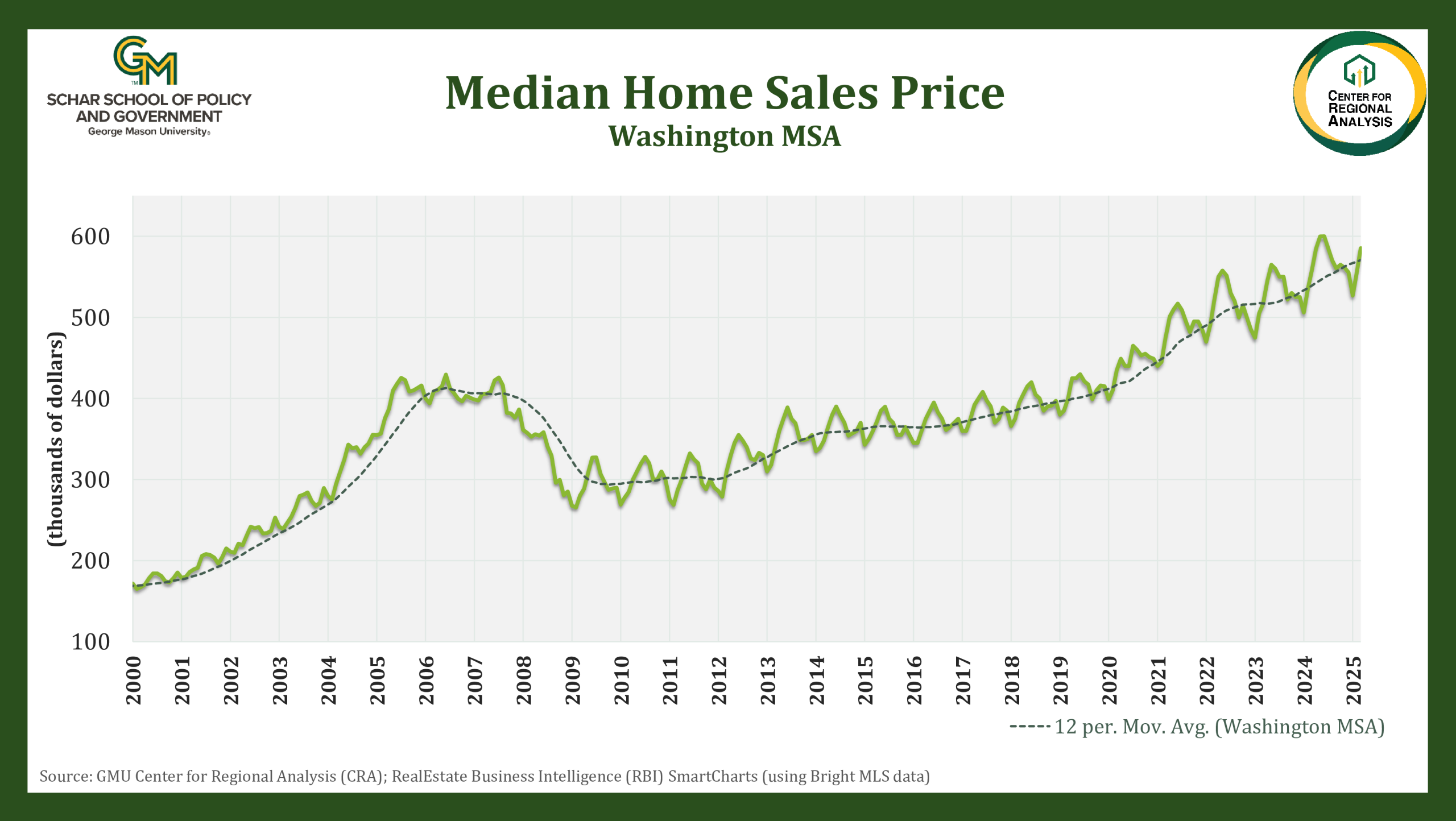
Waters warned that housing costs pose a growing threat to the region’s economic growth.
- The median home price in the region is around $550,000.
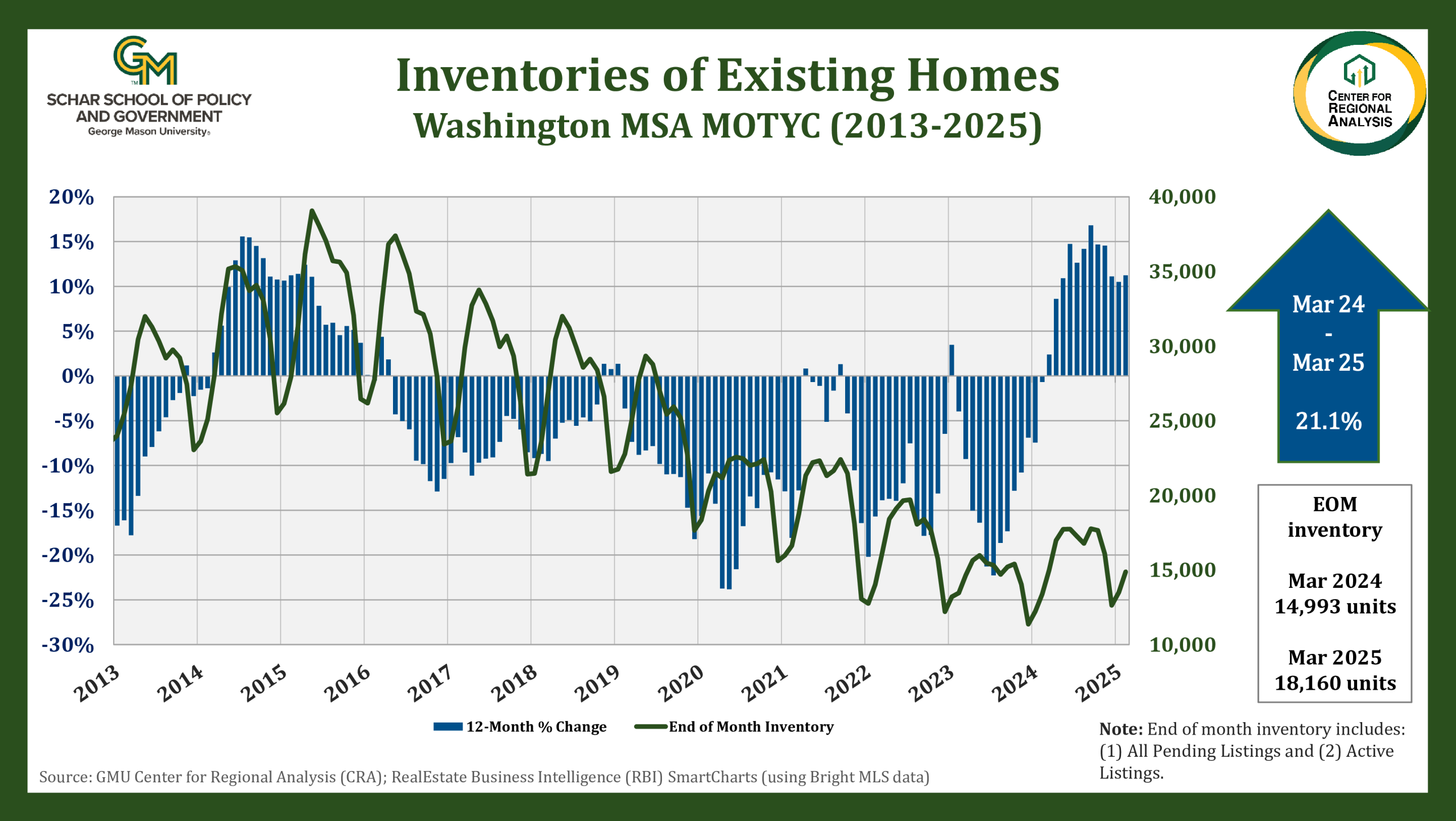
- At the end of March 2025, there were just 15,000 homes on the market for a population of 6.3 million — or 1 house per 351 people.
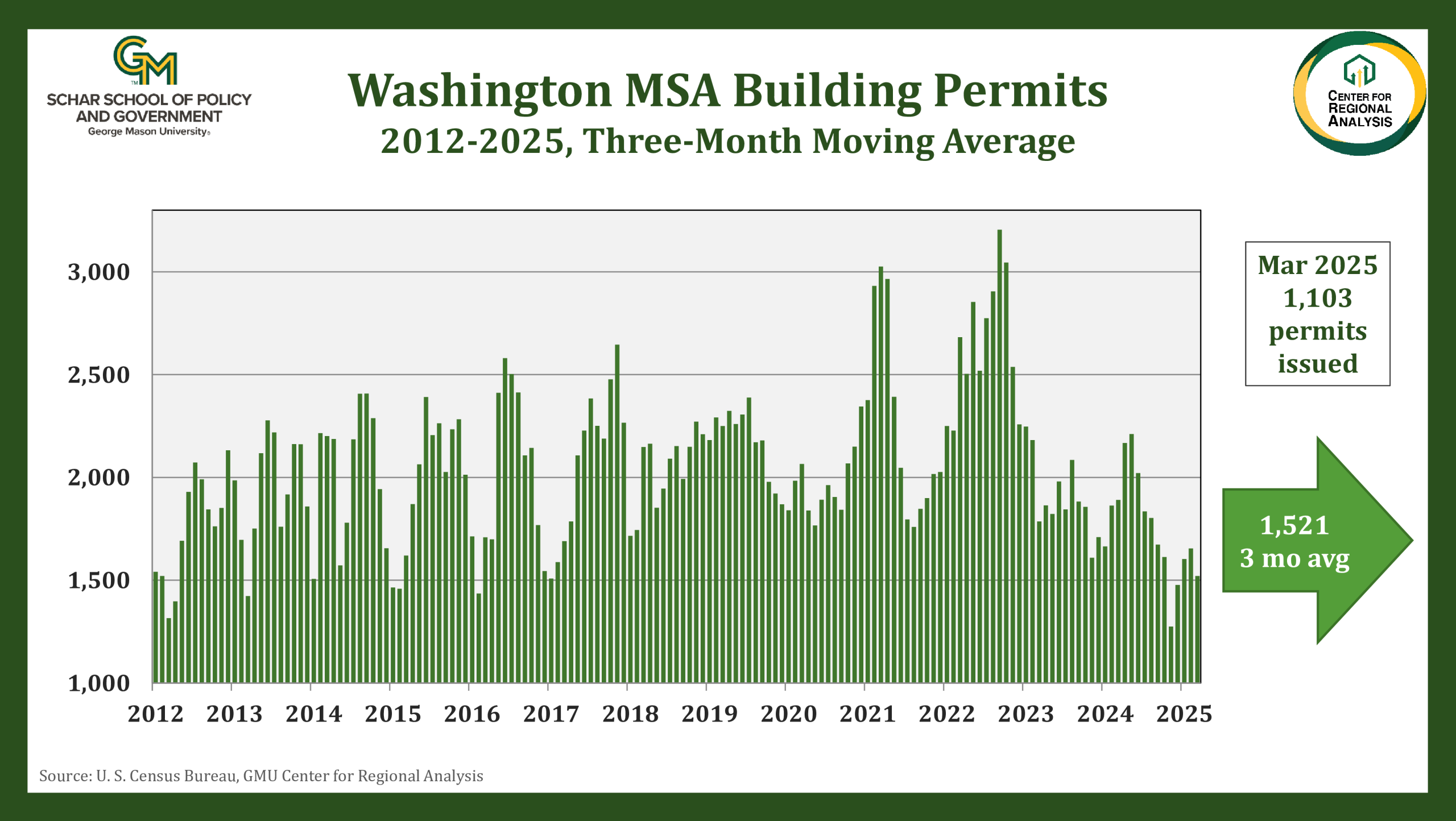
“Unfortunately, it’s a supply problem,” Waters said, citing permitting bottlenecks and regulatory hurdles that restrict housing development. “There’s nothing to buy.” The supply crisis is also not limited to Northern Virginia, and is consistent to the rest of the Commonwealth.
“When the Federal Reserve was raising interest rates [in 2022 and 2023 to combat inflation], maybe a dual-income household could previously afford a $600,000 or $700,000 house at 3% rate, but they cannot afford it at a 7% mortgage rate, which means companies cannot hire you,” he said. “And so growth goes to an absolute crawl.”
A Tale of Two Regions: Northern Virginia vs. Dallas
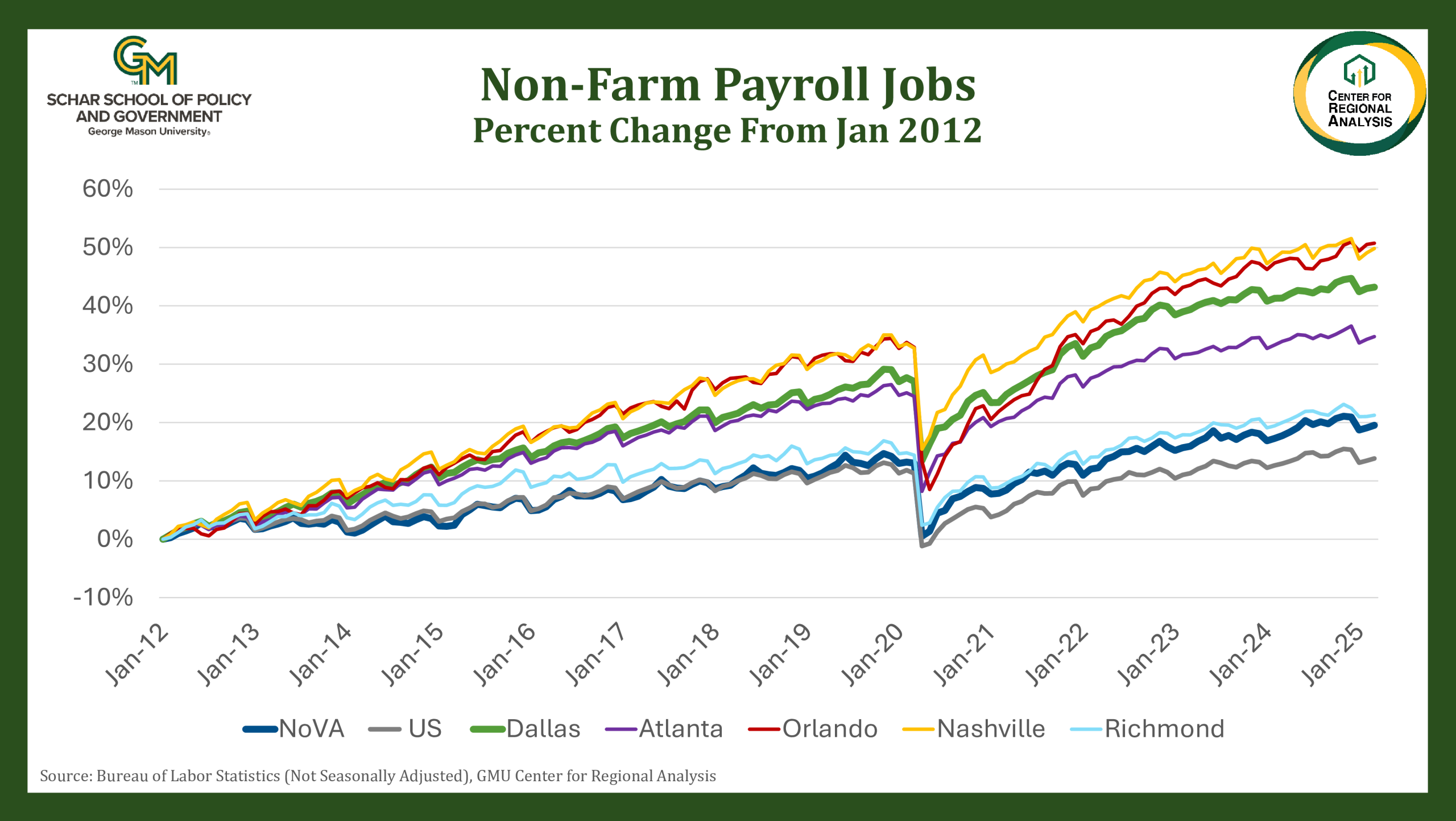
Waters used other U.S. cities, Dallas in particular, as a comparison to highlight missed opportunities in Northern Virginia (he picked Dallas because his boss is from there, “and I like to needle him about selling his house in Dallas before it probably doubled in value,” he joked).
Dallas (2012–2023):
- Added 1.3 million payroll jobs — up 43% since 2012
- Built 627,000 new housing units (up 24.6%)
Northern Virginia (same period):
- Added 266,000 jobs — up 19% since 2012
- Built 130,000 new units (up 13.2%)
“When we look to peers around the country, we’re actually underperforming, even to the good folks down in Richmond,” he said. Noting Dallas’ growth in 1.3 million jobs, “that’s the same amount of jobs that Northern Virginia basically had in 2012.”
Waters’ final warning…and hope
Despite the challenges, Waters emphasized that the region has key assets and potential. But local leaders must address housing supply and stop “self-inflicted errors” that drive housing costs up further, he said.
[button link=”https://sfullerinstitute.gmu.edu/economy-watch/#more” newwindow=”yes”] Find more Washington area economic data from the Stephen S. Fuller Institute[/button]