This article is from HBAV's historical archive. Some formatting may differ from current articles.
A quick reminder on how the Virginia General Assembly works: When a piece of legislation clears the House of Delegates or Senate, the bill then moves to the other chamber and goes through the process all over again.
Indeed, this Tuesday was “Crossover,” marking the halfway point of session. About half the bills in the House remain active, and about 58% in the Senate. HBAV continues to monitor many that impact our industry.
While we’re on the downswing of the session, HBAV’s legislative team remains working in the halls of the Virginia General Assembly to advocate for legislation to help our members build more homes and do so without burdensome regulations. Here’s where many of our bills stand. Session ends Feb. 22.

Active Bills HBAV Supports
Reduce Building and Development Timelines
Our priority bill focuses on streamlining the approval process of site plans and subdivision plats (SB974). The bill, carried by Sen. Schuyler VanValkenburg (D-Richmond), looks to create a more predictable and efficient approval process.
- Bill Status as of Feb. 6: Passed Senate 35-5 and today passed the House Counties, Cities and Towns subcommittee unanimously.
Building the Supply to Meet Demand
HB2660 from Del. Marcus Simon (D-Fairfax) makes the local government approval process for subdivision plats and site plans faster, clearer, and more efficient.
- Bill Status as of Feb. 6: Passed House 97-1, referred to Senate Local Government.
In addition, HB2641 from Del. Dan Helmer (D-Fairfax) would require localities to increase their total housing stock by at least 7.5 percent over a five-year period beginning January 1, 2026. In order to meet the 7.5 percent growth target, a locality would develop a housing growth plan that best meets the needs of the locality and may include any of various listed housing growth strategies.
- Bill Status as of Feb. 6: Passed House 50-48, referred to Senate Local Government.
Affordable Housing Finance
Another barrier to housing is often securing financing, leading to our support of HB1701 by Del. David Bulova (D-Fairfax). The bill extends and expand the Virginia Housing Opportunity Tax Credit (HOTC), set to expire in 2025. This incentive for affordable housing and development has proven effective in making projects financially viable and addressing our critical need for diverse and affordable housing options.
- Bill Status as of Feb. 6: HB1701 passed the House 94-3.
- HBAV is also working to protect the Virginia Historic Rehabilitation Tax Credit to prevent caps reductions or eliminations. This program has had significant economic and community benefits in revitalizing neighborhoods, creating jobs and attracting residential investment to historic areas across Virginia.
Reduce Infrastructure Costs

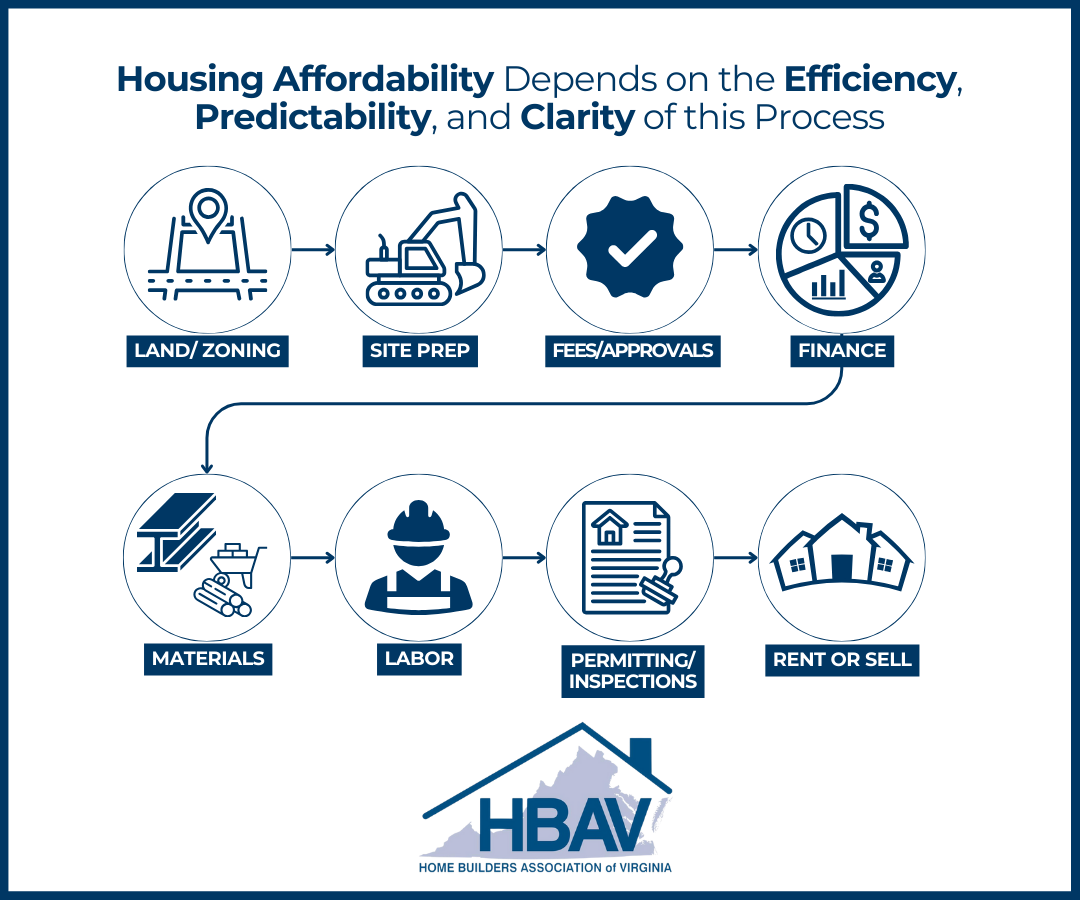
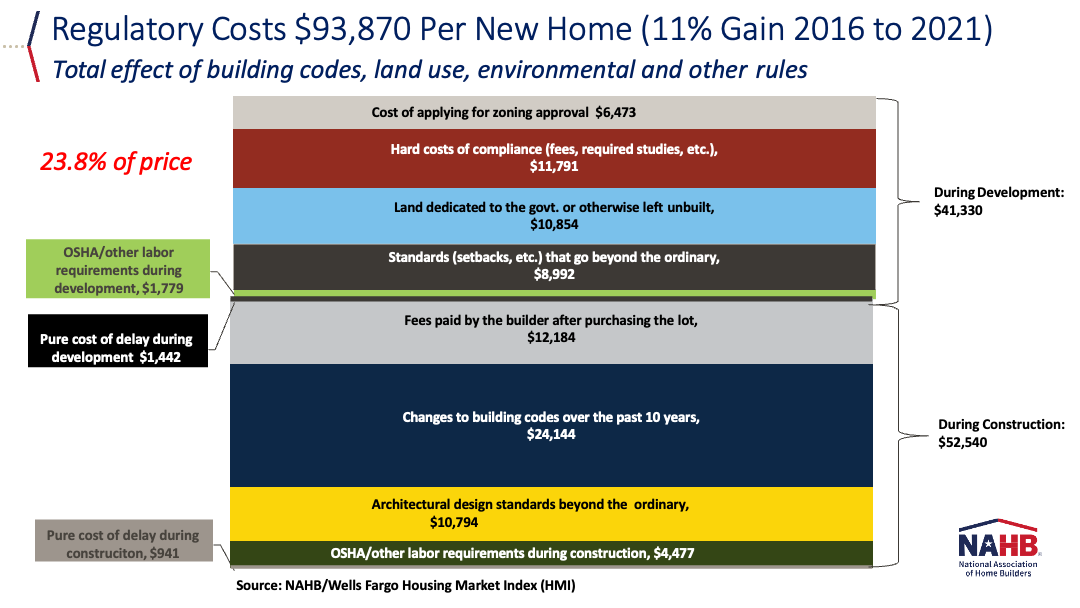
We’re communicating how the significant cost of infrastructure is leading to less housing and significantly increasing the cost of homes that are built. We’re working with Sen. Jennifer Carroll Foy (D-Fairfax) on SB1189 to establish the Virginia Residential Development and Infrastructure Fund, which creates a state-supported resource for critical housing infrastructure, including water, sewer, roads and stormwater systems for new residential and multifamily development. We’re working with Sen. Lamont Bagby (D-Richmond) on SB1263 to allow localities to provide for the full or partial reimbursement of water and sewer connection fees.
- Bill Status as of Feb. 6: SB1189 did not advance out of the Senate and was left in Finance and Appropriations and is dead for the year. SB1263 passed the Senate 38-0 and passed the House’s Counties, Cities and Towns subcommittee unanimously.
Prioritizing Disposition of State Property for Affordable Housing
HB1758 from Debra Gardner (D-Chesterfield) would evaluate surplus government property for affordable housing development. If deemed suitable, the property must be offered exclusively for 180 days to eligible organizations that commit to maintaining affordable housing for at least 40 years.
- Bill Status as of Feb. 6: Passed House 55-44 and referred to Senate Committee on General Laws.
We are also supporting Gardner’s HB1708, establishing the Access to Housing Task Force to evaluate both long- and short-term access to housing in Virginia, with a report due to the Governor and lawmakers by Nov. 1. The bill has been referred to the Housing Commission to study.
- Bill Status as of Feb. 6: Died in subcommittee.
Consumer protections
We’re backing HB1707 by Del. Bulova and SB1059 by Sen. T. Travis Hackworth (R-Tazewell). These would increase the contractor recovery fund from $20,000 to $30,000 per claim. The bills raise the project limit thresholds for A, B, and C, contractors licenses, which have not increased in 15 years.
- Bill Status as of Feb. 6: The House passed 97-0 and the Senate Committee on General Laws 12-0. It heads to the Senate floor for consideration. Similarly, the Senate version passed 39-0, cleared the House Committee on General Laws 21-0, and is headed to the House floor for consideration.
Energy
HB2506 from Del. Chris Runion (R-Augusta) and HB2086 from Del. Irene Shin (D-Fairfax) are related to energy efficient home tax credits. These would authorize an eligible contractor to claim an income tax credit during the upcoming years and the amount equal to $1,000 or $2,000 for building energy-efficient homes.
- Bill Status as of Feb. 6: The Runion bill was incorporated into the Shin bill, which failed to pass House Finance.
We’re also supporting SB777 by Sen. Locke to create an Energy Efficiency Weatherization Task Force. The force will work to evaluate ways to coordinate with local governments, utilities and contractors to deliver energy-efficient housing upgrades for Virginia households.
- Bill Status as of Feb. 6: Passed Senate 38-0 and referred to the House Committee on Labor and Commerce.
Bills HBAV Supported that Didn’t Advance
You win some, you lose some, you move forward. These three bills were supported by HBAV and carried by Del. David Owen (R-Henrico), himself a home builder and member, but they are off the table for the year.
- HB2349: Developer performance guarantees; clarifies existing provisions related to periodic partial release. It failed to report from subcommittee on a vote of 5-3.
- HB2480: Removed the need for a traffic study as a condition for approval of a rezoning application that involves either a single-family or multifamily residential use of fewer than 50 residential units. It failed to report from subcommittee on a vote of 5-3.
- HB2499: Would have reduced the initial review period for plats, site plans, and development plans. it failed to report from subcommittee on a vote of 5-3.
Active Bills HBAV Opposes
The HBAV team prides ourselves on being our members’ biggest line of defense, and every year brings bills that we oppose:
Requiring Surveys for Tree Root Systems
HB2238 by Del. Fernando Martinez (D-Loudoun) would allow localities to require a detailed map of all tree locations and critical root zones in a development. This would add delays and unnecessary costs.
- Bill Status as of Feb. 6: Passed the House 52-45 and heads to Senate.
 Rent control
SB1136 from Jennifer Boysko (D-Fairfax) and HB2175 from Del. Nadarius Clark (D-Suffolk) allow localities to pass ordinances limiting the amount that rents can be increased from year to year. This would lead to a decrease in the quality and quantity of available rental housing, discourages new construction, and exacerbates housing shortages.
- Bill Status as of Feb. 6: Both bills are dead for the year.
Inclusionary Zoning
SB1313 from Sen. Jeremy McPike (D-Prince William) allows localities to create mandatory affordable housing dwelling unit programs. This discourages development and will exacerbate the shortage of missing middle housing supply in Virginia.
- Bill Status as of Feb. 6: Passed Senate 20-19 and passed the House Cities, Counties and Towns subcommittee 6-2.
Road impact fees
HB2683 from Del. Delores Oates (R-Warren) would lower the local government population requirements for eligibility to adopt a road impact fee ordinance from a population of at least 20,000 and a population growth rate of at least 5 percent to a population of at least 15,000 with no growth rate requirement.
- Bill Status as of January 31: Failed in committee unanimously
Photos: Day on the Hill 2025
[foogallery id=”45812″]